There is a proper way to drink a slushy, and most people are doing roughly none of it. They stab the straw straight down the middle, inhale half the cup in twenty seconds, get hit with a skull-splitting headache, then spend the next ten minutes drinking flavored water out of the bottom. It is a preventable tragedy, and this post fixes it.
None of this is complicated. It is mostly about temperature, pacing, straw placement and knowing when to use the spoon end. Do it right and a 22-ounce cup stays cold, textured and flavorful from the first pull to the last scrape.
Why Slushy Technique Actually Matters
A slushy is not a drink with ice in it. It is a suspension of microscopic ice crystals held in flavored syrup, and that structure starts collapsing the second it leaves the machine. Every bad habit you have speeds up the collapse.
Three things are working against you from the moment you get the cup:
- Heat transfer from your hands. Palms sit around 90°F. A bare-handed death grip on the lower third of the cup melts that section first.
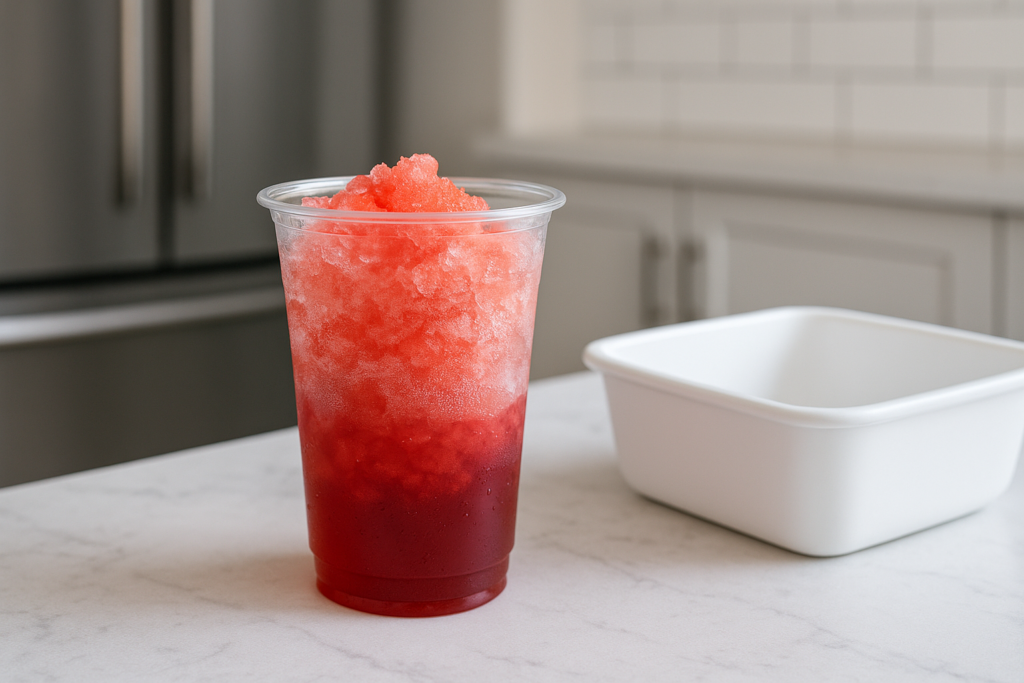
- Gravity separation. Denser syrup sinks, lighter ice floats. Left alone for five minutes, you get a pale crown on top and a sugar bomb at the bottom.
- Air. Every time you pop the lid or slurp air through a half-buried straw, warm air moves into the cup and softens the surface.
Good technique is really just slowing those three things down while you drink. That is the whole game.
The Proper Way to Drink a Slushy, Step by Step
- Hold the cup by the top rim or the lid collar. Fingertips only, thumb on the rim. If your cup has a sleeve or you are outside in July, use it. Your hands are the fastest melt source in the equation.
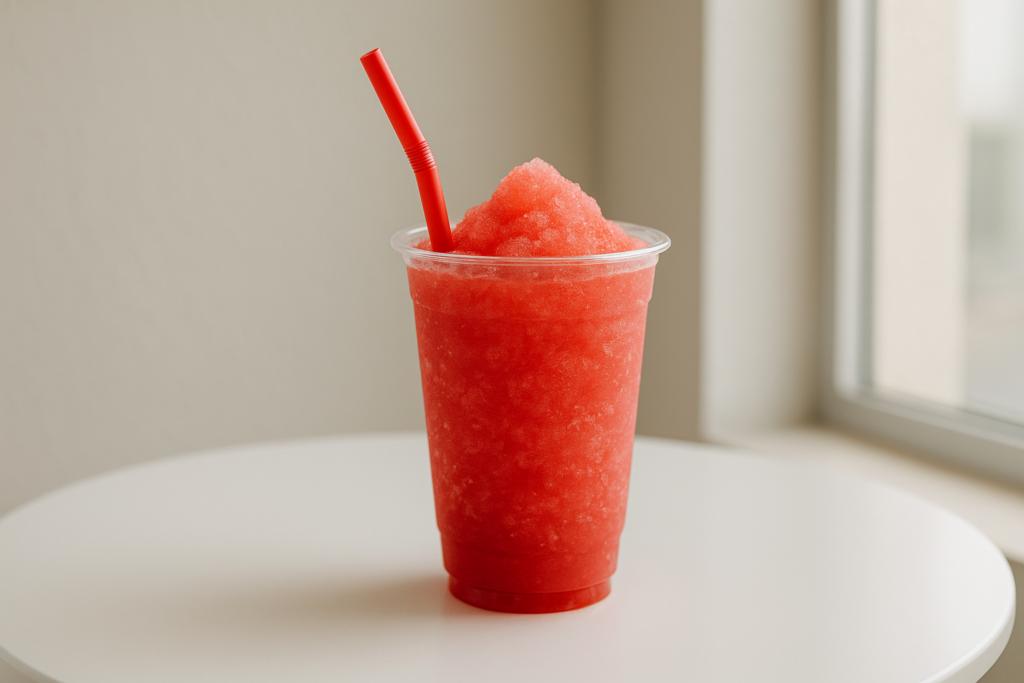
- Insert the straw at a 45-degree angle, about two-thirds of the way toward the far wall. Straight down the center creates a melt channel that turns into a syrup well. Angled placement pulls from a wider cross-section.
- Take a short test pull, then wait ten seconds. This is the single biggest brain freeze prevention move. The first cold hit tells your palate what is coming and gives it a moment to adjust.
- Sip in pulses of two to three seconds, not one long draw. Long draws dump 40°F material against your soft palate all at once, which is exactly what triggers the headache.
- Let each mouthful sit on the middle of your tongue for a beat before swallowing. Keep it away from the roof of your mouth. This is not fussy, it genuinely works.
- Rotate the straw to a new zone every four or five sips. Think of the cup in quadrants and work them evenly instead of drilling one hole to the bottom.
- Switch to the spoon end at the two-thirds mark. Once the texture goes from drinkable to scoopable, stop fighting the straw and start eating it.
That sequence stretches a normal cup from about four minutes of frantic drinking to fifteen or twenty minutes of the thing actually tasting good. It is also why the spoon on the end of the straw exists in the first place, and it is not decorative.
Brain Freeze: What It Is and How to Not Get It
The medical name is cold-stimulus headache, sometimes called sphenopalatine ganglioneuralgia, and it happens when rapid cooling of the palate causes blood vessels to constrict and then rapidly dilate. The pain peaks around 25 to 60 seconds after the trigger and usually resolves within two minutes. Plenty of research on it exists, including a decent overview of cold-stimulus headache and its mechanism.
Prevention beats treatment every time. Keep the cold material on the front and middle of your tongue, pulse your sips, and never chug the first thirty seconds of a fresh cup.
If it hits anyway, press your tongue flat against the roof of your mouth and hold it there, or drink something room temperature. Warming the palate back up is the fastest exit. We go deeper on that in our post on how to stop a brain freeze fast.
The Stir Question Nobody Agrees On
Search the proper way to drink a slushy on Reddit and you will find people who stir religiously and people who consider it sacrilege. Both camps have a point.
Stir once, at the start. A single gentle fold with the spoon end evens out the syrup distribution from the machine, which tends to lay down denser mix at the bottom of the cup. That one stir gives you consistent flavor for the rest of the session.
Do not stir repeatedly. Every agitation introduces warmth and breaks ice crystals into smaller pieces that melt faster. Three or four stirs is how you end up with a cup of cold juice in under ten minutes.
If your straw clogs partway through, resist the urge to stir your way out of it. There is a cleaner fix in our guide on unclogging a slushy straw without losing your mind.
Fridge or Freezer? Storage and Consistency Rules
If you are making a homemade slushie or saving half a cup for later, the fridge is not an option. A refrigerator runs around 37°F, which is roughly 10 degrees above the point where slush holds structure. Twenty minutes in there and you have a beverage.
The freezer works, but with a caveat. Home freezers sit at 0°F, which the FDA recommends for safe food storage, and that is actually too cold for slush. A slushy holds its texture between roughly 20°F and 28°F depending on sugar content. Park it at 0°F for an hour and you get a solid brick.
The workaround most people land on:
- Freeze for 20 to 40 minutes, not hours, and scrape the edges with a fork every 15 minutes.
- If it has already gone solid, let it sit at room temperature for 8 to 12 minutes, then break it up with the back of a spoon.
- Higher sugar content lowers the freezing point, which is why a regular soda slush stays scoopable longer than a diet version or plain water and flavoring.
That sugar-to-water ratio is the whole secret to a perfect consistency. Aim for a mix that is somewhere around one part syrup to five parts liquid, and adjust from there. Too much water and you get ice chunks floating in a puddle. Too much syrup and it never freezes at all.
Can You Put Any Drink in a Slush Machine?
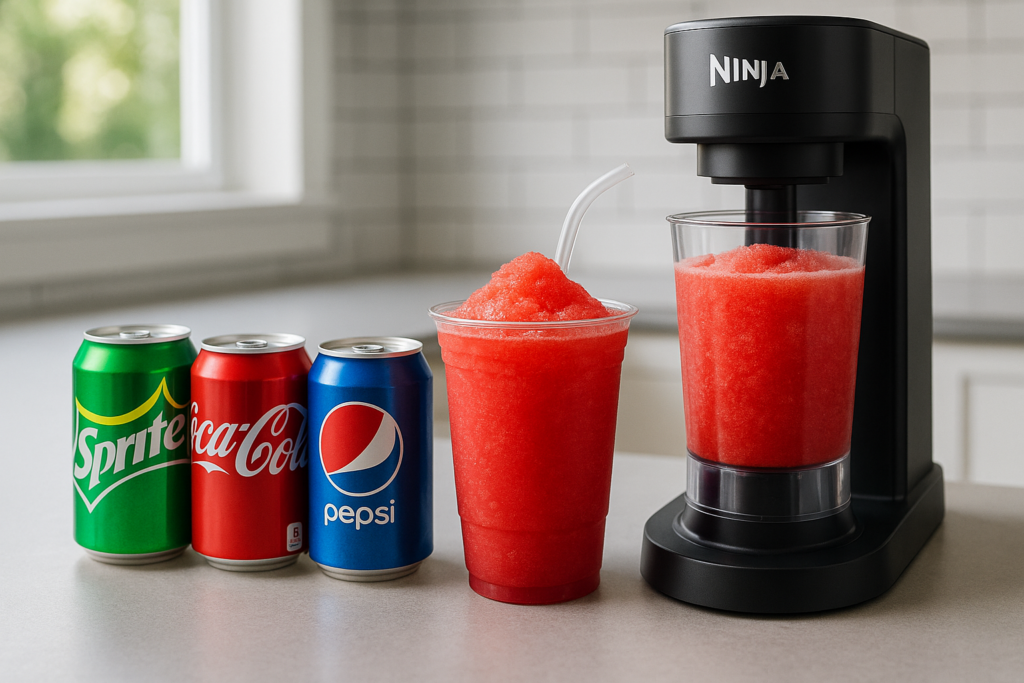
Short answer, no. A slushie machine needs sugar to work, and carbonation is a problem rather than a feature. Most commercial units want a mix in the range of 12 to 14 percent sugar by volume, and they need it flat.
What works well:
- Flat soda that has been left open for an hour or stirred until it stops fizzing
- Juice blends with added simple syrup to hit the sugar threshold
- Cocktail recipes like frozen margarita, frosé or an orange creamsicle blend, as long as the alcohol content stays under about 15 percent of the total volume
Alcohol lowers the freezing point hard. Go above that threshold and an Iceman slushie machine or a home Ninja unit will spin a cold liquid forever without ever forming crystals. If your tequila slush refuses to freeze, dilution is usually the fix, not more freezing time.
Plain water is the one thing to avoid entirely. It freezes into a single mass and can damage the auger in a countertop machine.
Mistakes That Ruin an Otherwise Good Cup
- Overfilling past the rim. Looks impressive, melts immediately, and the lid pushes a syrup channel straight down the middle.
- Layering flavors and then not stirring. Layers are a photo, not a drinking experience. Pick your combo and fold it once.
- Leaving it in a hot car. Interior temperatures climb 20 degrees in ten minutes on a summer day. There is no recovering from that.
- Drinking through a soft paper straw in a thick mix. It collapses. We have an entire post on that argument.
Also worth saying: sharing a slushy is fine, sharing a straw is not. Our stance on this is documented at length in Friends don’t drink friends, which is less a policy and more a way of life.
Frequently Asked Questions
Do you put a slushie in the fridge or freezer?
Freezer, but only for 20 to 40 minutes at a time. A fridge at 37°F will melt slush completely within about 20 minutes, while a 0°F freezer will turn it into a solid block if you leave it more than an hour. Scrape it with a fork every 15 minutes to keep the crystals loose.
How do you get the perfect slushy consistency?
Target roughly one part syrup to five parts liquid, and serve it between 20°F and 28°F. Sugar lowers the freezing point, so a sweeter mix stays scoopable longer while low-sugar versions freeze hard and fast. If the texture goes wrong, add a splash of room-temperature liquid and fold it in once rather than stirring repeatedly.
Can you put any drink in a slush machine?
No. A slush machine needs about 12 to 14 percent sugar by volume and a flat, non-carbonated liquid to form proper ice crystals. Plain water, heavily carbonated soda and anything over roughly 15 percent alcohol will either jam the auger or refuse to freeze at all.
How do you drink a slushy correctly?
Angle the straw at 45 degrees, sip in two to three second pulses, and keep each mouthful on the middle of your tongue instead of the roof of your mouth. Rotate the straw to a fresh spot every four or five sips so you are not drilling one melt channel, and switch to the spoon end once the last third gets too thick to pull.
Go Drink One Properly
Now that you know the technique, the only thing left is the cup, the straw and the flavor decision. Grab a Slushy Bros cup and put all of this to work on your next one.