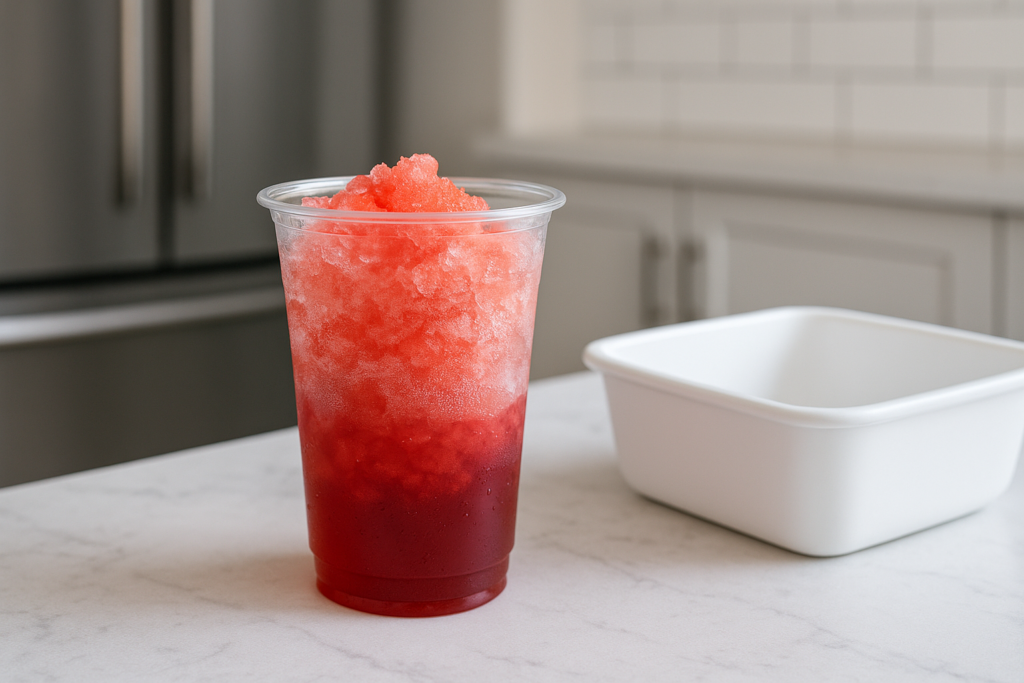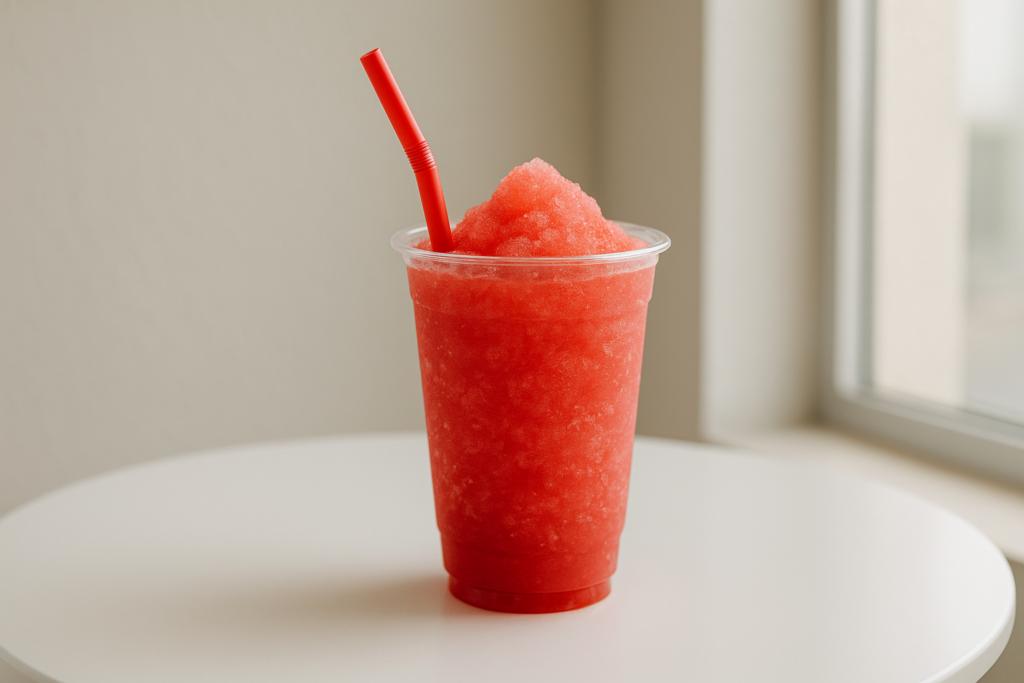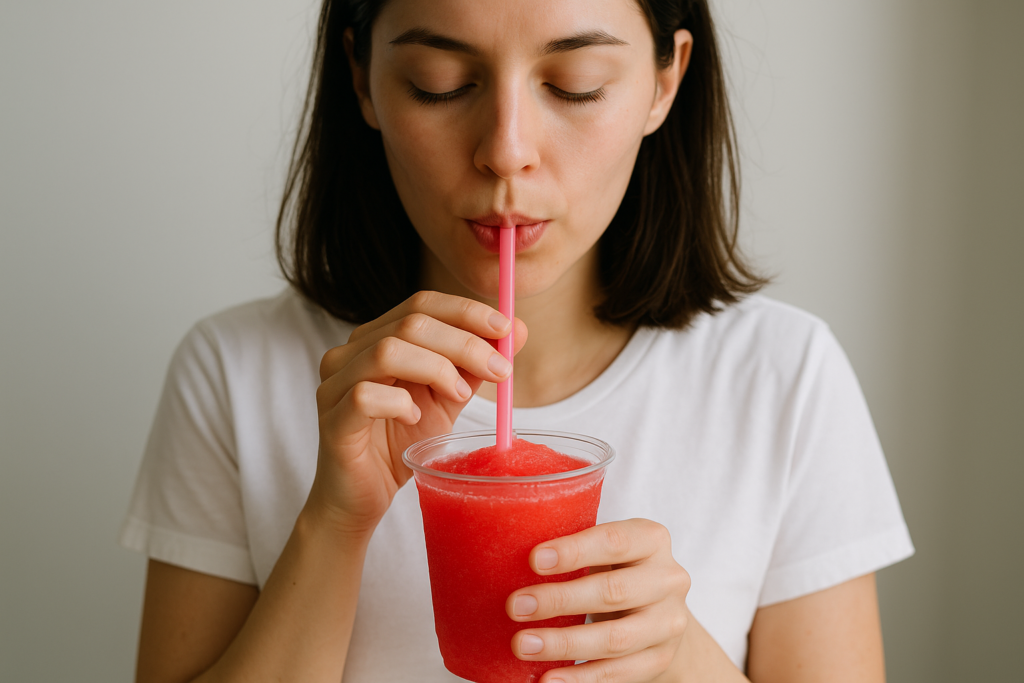
Full-sugar soda wins every time in this machine, and it comes down to one number buried in the manual: roughly 4 grams of sugar per 100 ml of liquid. Below that line, the mixture freezes into a solid puck instead of churning into drinkable slush. So the best soda for the Ninja SLUSHi is plain old regular Coke, Mountain Dew, Dr Pepper or any classic full-sugar soda straight out of the bottle, no math required.
Everything else in this post is about the edge cases: diet drinks, mixing flavors, carbonation loss, and the sodas that technically work but taste strange once they are frozen.
Why 4 grams of sugar per 100 ml is the only spec that matters
Sugar lowers the freezing point of water, which is what lets the SLUSHi scrape a soft, slurry texture off the chilled wall of the vessel instead of building an ice wall. Ninja sets a minimum of about 4% sugar content by volume for slush mode, and alcohol plays a similar role in spiked recipes. Most mainstream sodas clear that bar with room to spare.
Here is where the popular options land, using per-100 ml figures you can verify against USDA FoodData Central:
- Mountain Dew: about 12.3 g per 100 ml, the highest of the big brands
- Fanta Orange (US): around 12 g per 100 ml
- Pepsi: roughly 11 g per 100 ml
- Barq’s Root Beer: about 11.2 g per 100 ml
- Coca-Cola Classic: 10.6 g per 100 ml
- Sprite: around 10.7 g per 100 ml
- Dr Pepper: about 10.4 g per 100 ml
- Canada Dry Ginger Ale: roughly 9.2 g per 100 ml
- Tonic water: near 8.9 g per 100 ml, the low end of usable
- Any zero-sugar or diet soda: 0 g, which will not slush on its own
Every one of those non-diet numbers sits at two to three times the minimum, which is why full-sugar soda behaves so predictably. That also means a single 64 oz vessel of cola carries a serious amount of added sugar, well past the FDA daily value of 50 grams, so treat it as a shared pitcher rather than a solo drink.
The sodas that come out best
Regular Coca-Cola
Cola is the safest first run and the one most people should start with. The caramel and spice notes hold up when cold, and the texture lands somewhere between a gas station Coke slush and soft-serve. Mexican Coke made with cane sugar freezes just as well and tastes slightly rounder, though you are paying two or three times as much per ounce for the difference.
Mountain Dew
The highest sugar load of the mainstream sodas gives it the loosest, most scoopable texture, and the citrus flavor actually gets louder when frozen. If your slush keeps coming out too firm with other drinks, Dew is the reliability pick. The green color reads well on camera too, which is half the reason it shows up in so many of our clips.
Dr Pepper
Dr Pepper’s 23 flavors get muted by cold, so the result tastes more like a cherry-vanilla cream soda than the room-temperature version. Plenty of people prefer it that way. It is one of the few sodas that improves with a splash of half-and-half in frappe mode.
Orange, grape and other fruit sodas
Fanta, Sunkist, Crush and Jarritos land closest to the classic convenience-store slushy flavor profile, because that is essentially what those machines dispense. Orange and grape are the standouts. Fruit sodas also hold their color better than cola, so they photograph like the real thing.
Root beer and cream soda
Root beer turns into something close to a frozen float, and adding two ounces of whole milk or a scoop of vanilla ice cream after the cycle takes it the rest of the way. Cream soda does the same job with less sarsaparilla bite. Both freeze cleanly thanks to sugar levels above 11 g per 100 ml.
Lemon-lime
Sprite, 7UP and Starry produce the cleanest-looking slush and the mildest flavor, which makes them the best base for mixing. On their own they can read a little thin. A half ounce of lime juice or a shot of grenadine fixes that without dropping the sugar content.
What to skip, and what to do about diet soda
Diet Coke, Coke Zero, Pepsi Zero Sugar, Diet Dr Pepper and every flavored seltzer will fail in slush mode because they contain no sugar to depress the freezing point. You will hear the auger labor, then the machine will either stall or build a solid ring of ice on the vessel wall. Sparkling water and unsweetened tea have the same problem.
There are three workarounds, in order of how well they actually perform:
- Allulose: around 1/4 cup dissolved into a 64 oz batch. It behaves like sugar in a freezer, keeps the mix soft, and adds very few usable calories.
- A splash of the full-sugar version: roughly a 3:1 diet-to-regular ratio still cuts sugar substantially while clearing the 4% threshold.
- Simple syrup or honey: works reliably, but at that point you have undone most of the reason you bought diet soda.
Erythritol and stevia blends are the ones that disappoint most often. They sweeten fine, yet they do very little to the freezing point, so the texture stays icy and chunky rather than smooth.
Your slush will not be fizzy, and that is normal
The auger turns constantly for 15 to 60 minutes depending on your starting temperature, and carbonation does not survive that. Expect the finished product to taste like flat soda with a frozen texture, which is exactly what a convenience-store machine dispenses anyway. Anyone comparing the two should read our breakdown of the best gas station slushies ranked to see where the flavors line up.
Two habits make the fizz question easier to live with:
- Pour slowly down the side of the vessel so the initial foam does not push you past the max fill line.
- Top each glass with 1 to 2 oz of fresh cold soda after serving, which restores a little carbonation and thins overly stiff slush.
Chilling the soda in the fridge overnight before it goes in also shortens the cycle by several minutes, since the machine spends less energy pulling the liquid down from room temperature.
Mixes worth running
Once you understand the sugar rule, combinations are easy because nearly every soda blend stays above the minimum. A few that consistently get finished first at our shoots:
- Coke and cherry syrup (1 oz syrup per 64 oz batch) for a diner-style cherry Coke slush
- Sprite and blue raspberry syrup for the arcade-blue color without an artificial aftertaste
- Root beer plus 2 oz heavy cream, added in the last five minutes of the cycle
- Half orange soda, half pineapple juice, which lands close to a frozen creamsicle
- Dr Pepper and a splash of amaretto for the 21-and-up version, using spiked slush mode
Keep juice at or under half the batch. Most 100% juices sit near 10 g of sugar per 100 ml, so they work, but they thicken differently and can make the texture gummy at high ratios.
Small things that change the result
Fill to the max line rather than half-filling, because a short batch freezes to the wall faster and churns unevenly. Rinse the vessel between flavors, since cola residue turns a lemon-lime batch muddy brown within a minute. And use a wide straw: thin ones clog on slush, which we got into when we compared paper and plastic straws for slushies.
If you are feeding more than six people, one countertop unit will not keep up, and a second machine or a rented commercial unit makes more sense. Our rundown of the best slushy machines for parties covers where the cutoff sits.
Frequently Asked Questions
Can you use diet soda in the Ninja SLUSHi?
Not on its own, because slush mode needs roughly 4 grams of sugar per 100 ml and diet soda has zero. Adding about 1/4 cup of allulose to a full 64 oz batch is the most effective fix, since allulose lowers the freezing point the way sugar does while erythritol and stevia largely do not.
Does the Ninja SLUSHi keep soda carbonated?
No. The auger runs continuously for 15 to 60 minutes and drives off nearly all dissolved carbon dioxide, so the finished slush tastes like chilled flat soda. Topping each serving with 1 to 2 ounces of fresh soda brings back some of the sparkle.
How long does soda take to freeze in the Ninja SLUSHi?
Most full-sugar sodas reach slush texture in 15 to 60 minutes, with refrigerator-cold liquid finishing near the low end of that window. Room-temperature soda can add 10 to 20 minutes to the cycle.
Which soda has the best texture in a frozen drink maker?
Mountain Dew, at about 12.3 grams of sugar per 100 ml, produces the softest and most scoopable slush of the major brands. Orange sodas sit just behind it, while lower-sugar options like ginger ale and tonic water freeze firmer and can feel icy.
Can you mix alcohol with soda in the SLUSHi?
Yes, and spiked slush mode is built for it, with most recipes calling for no more than 20% alcohol by volume in the vessel. Alcohol lowers the freezing point on its own, so heavy pours produce a loose, soupy drink rather than slush.
Drink it out of something better
A good batch deserves more than a random cup from the back of the cabinet, so take a look at My Cup or the rest of the gear in the Slushy Bros shop before your next round.