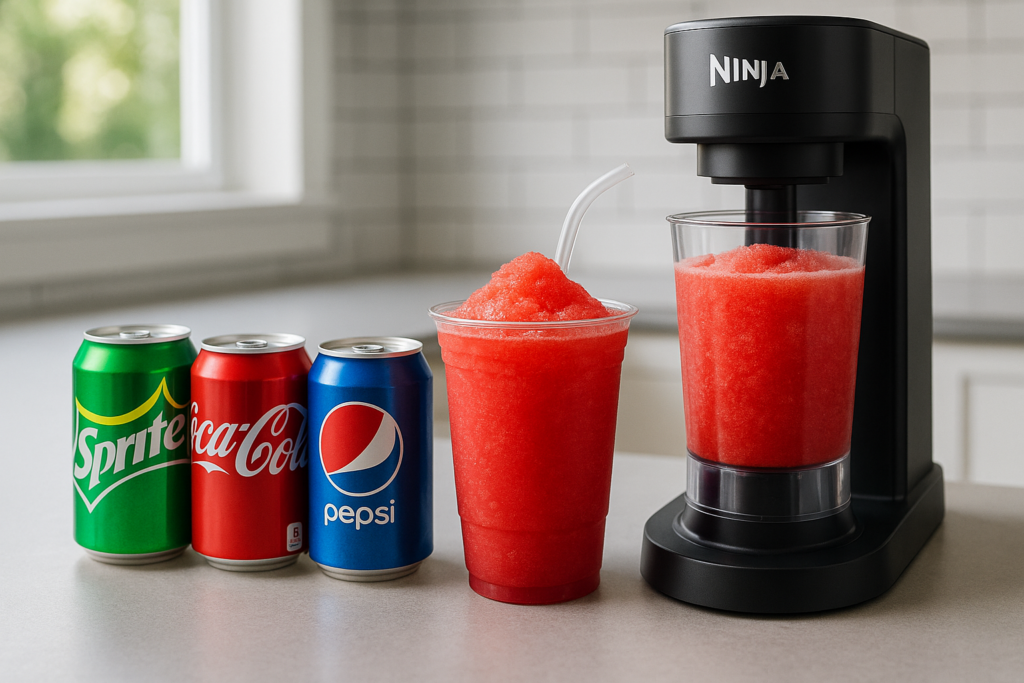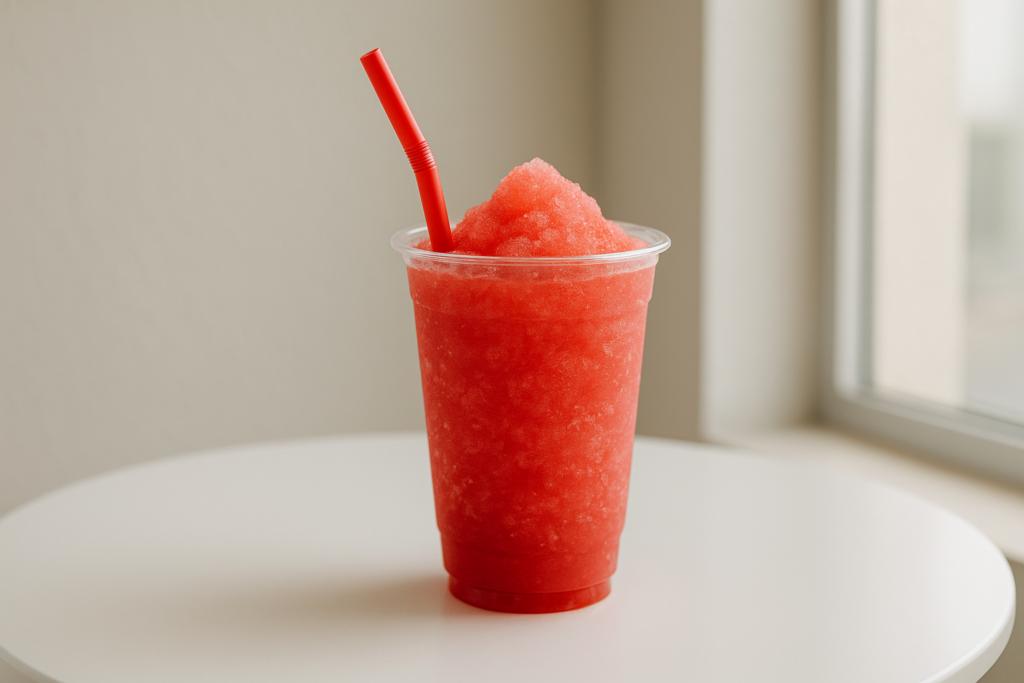
Yes, you can refreeze a melted slushy, but if you just shove the cup back in the freezer and walk away, you will come back to a solid puck of flavored ice with a straw sticking out of it. The freezing part is easy. Getting the texture back is the part nobody warns you about, and it comes down to how big the ice crystals grow while the drink sits there refreezing undisturbed.
Below is what happens chemically when your slush goes soupy, the recovery method that actually works, and the point where you should stop fighting it and pour a fresh one.
The Short Answer
A melted slushy can go back in the freezer safely and will refreeze within roughly 90 minutes to 3 hours depending on volume and freezer temperature. The texture, however, will be closer to a popsicle than a slush unless you break it up with a fork every 30 minutes while it sets. That stirring step is the entire difference between a drinkable slushy and a block you have to chip at.
What Actually Happens When a Slushy Melts
A slushy is not frozen liquid. It is a suspension of millions of microscopic ice crystals floating in a concentrated sugar syrup, which is why you can suck it through a straw at all. The sugar lowers the freezing point of the water, a process called freezing point depression, so part of the mixture stays liquid even below 32°F.
When the drink warms up, those tiny ice crystals melt first and the sugar syrup stays behind. What you are left with is the sad, oversweet juice at the bottom of the cup that every kid in America has tried to drink and immediately regretted.
Here is the part people miss: once it melts, the water and sugar redistribute unevenly. The bottom of the cup is syrup-heavy, the top is watery, and if you refreeze it as-is, you freeze that separation in place. That is why a refrozen slushy often tastes bland on top and cloyingly sweet at the bottom.
Why the Freezer Turns It Into a Brick
Ice crystal size is the whole ballgame. A commercial slushy machine constantly scrapes the freezing surface, which keeps crystals microscopic and evenly dispersed. A home freezer does the opposite: it freezes slowly and without agitation, so crystals have hours to grow into each other and fuse.
Slow, still freezing produces big crystals. Big crystals lock together. Locked crystals equal one solid mass that no straw on earth is getting through, which is a separate problem we have written about in our piece on unclogging a slushy straw.
Two other things work against you. Most home freezers run around 0°F to 5°F, which is far colder than the 20°F to 26°F range a slush machine holds, and cups full of melted slushie freeze from the outside in, so the center is still liquid while the walls are already solid.
The Rescue Protocol: How to Refreeze a Melted Slushy Properly
This is the method that actually gets you something drinkable. It takes about two hours of low-effort babysitting, and it works with almost any flavor that does not contain dairy.
For a closer look at this topic, see our guide: Best Slushy Flavors for Winter Because We Don’t Care.
- Stir it first. Pour the melted slushie into a wide, shallow container and mix thoroughly so the sugar is evenly distributed again. A loaf pan or a food storage container beats a tall cup every time because surface area speeds freezing.
- Freeze for 30 minutes. Set a timer. You want the edges just starting to set, not solid.
- Scrape with a fork. Drag the fork through the semi-frozen edges and pull them into the liquid center. This breaks crystals apart and mimics what a machine does mechanically.
- Repeat two to four more times. Scrape every 25 to 30 minutes until the whole thing is a uniform slush, usually after 90 minutes to 3 hours total.
- Serve immediately. Refrozen slush degrades fast. If you leave it in the freezer overnight after it sets, you are back to a brick.
If you forget the timer and find a solid block, you are not out of options. Let it sit on the counter for 10 to 15 minutes, then attack it with a fork or drop the chunks into a blender with a short pulse. The blender route works but adds air, so it comes out lighter and fluffier than a true slush.
Can You Refreeze a Melted Slushy in the Fridge?
No. A refrigerator runs at or below 40°F, which is nowhere near cold enough to freeze a sugary drink whose freezing point sits somewhere in the low 20s. Putting a melted slushy in the fridge only keeps it cold and slows further warming.
Your slushie will absolutely melt in the fridge if it is still partially frozen when it goes in. The fridge is a holding pen, not a freezer. It is useful if you want to refrigerate the leftovers for an hour and deal with them later, but it will never rebuild ice crystals.
How Long Can You Refreeze a Melted Slushy?
Texture aside, food safety sets the real limit. The USDA’s guidance on the danger zone between 40°F and 140°F gives you roughly two hours at room temperature before bacteria growth becomes a concern, and just one hour if it is above 90°F outside.
Practical rules we go by:
- Under 2 hours out, no mouth contact: refreeze it without a second thought.
- Under 2 hours out, but you drank from it: fine for you personally, not for sharing.
- Over 2 hours at room temperature: pour it out, especially anything with dairy, cream or real fruit puree.
- Left in a hot car: gone. No exceptions, no negotiation.
Once properly refrozen, treat it like any frozen dessert and finish it within about a week. It stays safe longer than that, but freezer burn and ice crystal growth make it unpleasant well before it becomes unsafe. If you want to know how much runway you actually have on a hot day, we timed it in how long you can leave a slushy out before it melts.
Which Flavors Survive a Refreeze Best
Not all slushies come back the same. High-sugar fruit flavors like blue raspberry, cherry and mango refreeze reliably because the sugar keeps crystals small even during slow freezing.
The ones that struggle:
- Carbonated slurpee-style drinks: the fizz is gone after the first melt and never comes back, so the flavor reads flat.
- Cream or milk-based slushies: fat separates and the texture goes grainy.
- Low-sugar or sugar-free mixes: less freezing point depression means bigger crystals and a harder, icier result.
- Anything with fresh fruit chunks: the pieces freeze solid and turn into tooth hazards.
If your refrozen batch tastes a little dull, stir in a splash of undiluted syrup or juice before the final freeze. We have a running list of combinations worth experimenting with in our favorite slushy flavor pairings, and several of them are more forgiving on a second freeze than a plain single flavor.
When to Just Start Over
Has anyone ever refrozen a melted slushy and thought it was better than the original? Not that we have heard. A refreeze is damage control, and if the drink has been sitting for hours, has gone warm and flat, or has separated into two distinct layers you cannot stir back together, making a fresh batch takes about 10 minutes and tastes dramatically better.
Blend ice, syrup and a small amount of cold water, and you have a real slush with tiny crystals instead of a reconstructed one. That is a better use of your afternoon than chipping at a puck with a spoon.
Frequently Asked Questions
Can you refreeze a slushie?
Yes, a slushie can be refrozen safely as long as it has been out of the freezer for less than two hours at room temperature. The texture will only stay slushy if you stir or fork-scrape it every 25 to 30 minutes while it sets, otherwise it freezes into one solid block.
What happens if you put a slushie in the freezer?
A full slushie left undisturbed in a home freezer at 0°F to 5°F becomes rock solid within about 2 to 4 hours. Home freezers run far colder than the 20°F to 26°F a slush machine holds, and without agitation the ice crystals grow large and fuse together.
Will my slushie melt in the fridge?
Yes. A refrigerator sits at or below 40°F, which is well above the freezing point of a sugary drink, so a slushie will fully melt in roughly 45 to 90 minutes in the fridge. The fridge slows melting compared to a countertop, but it cannot maintain or rebuild frozen slush.
How do you save a slurpee for later?
Transfer it to a shallow, sealed container and freeze it flat, then fork-scrape it every 30 minutes for the first 90 minutes. Expect to lose the carbonation permanently, and plan on drinking it within about a week before freezer burn sets in.
Come Hang With the Slushy Bros
We test this stuff so you do not have to ruin another cup. Check out what the Slushy Bros creator crew is mixing up, see what we are doing on the sports side, or jump in on the free merch drop we run every 10K subs.