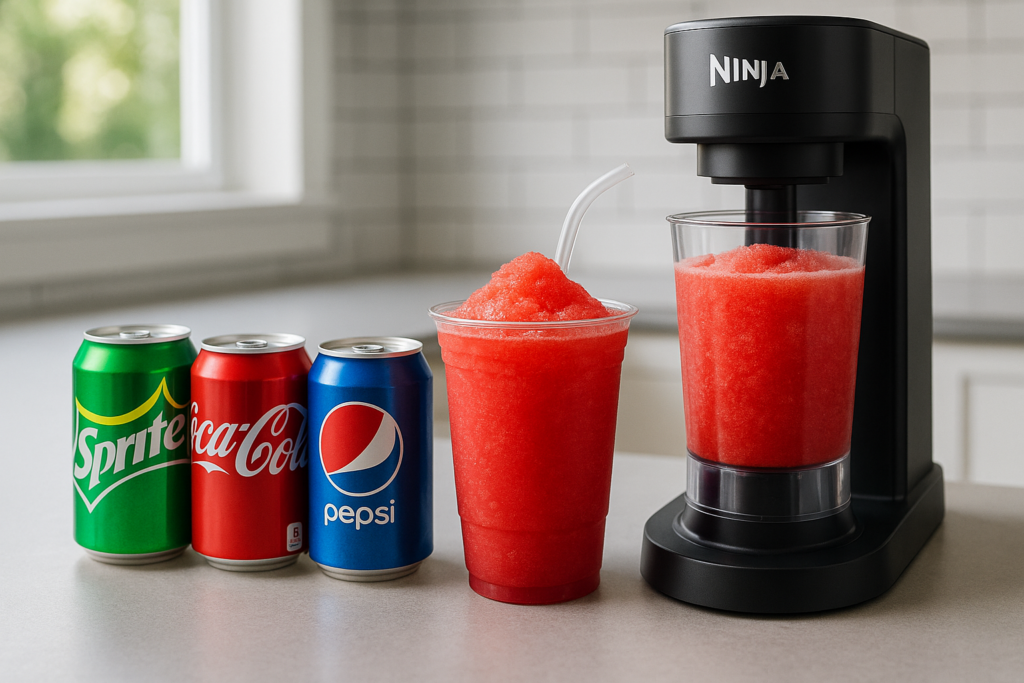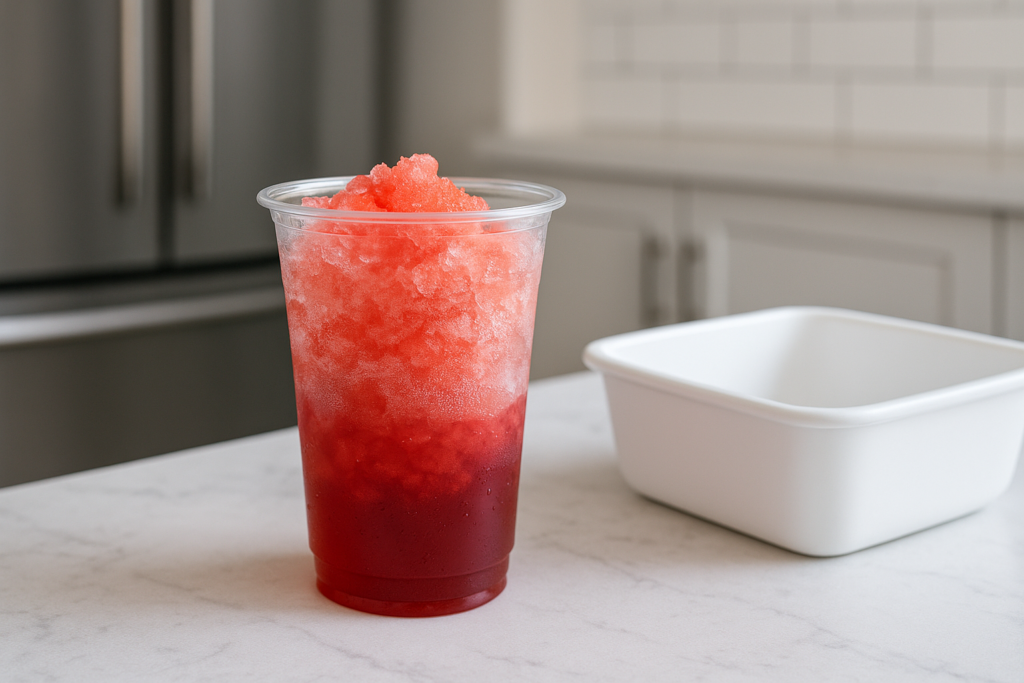
A slushy left out at normal room temperature (around 70°F) usually holds a drinkable slush texture for 20 to 40 minutes, then turns into flavored syrup with ice chips floating in it. In direct summer sun or a hot car, you have closer to 8 to 15 minutes before the texture collapses. How long you can leave a slushy out before it melts depends mostly on three things: the air temperature, how much sugar is in the mix, and whether the cup is insulated.
The frustrating part is that a slushy does not melt evenly. It separates, with liquid pooling at the bottom while a raft of ice floats on top, which is why the last third of a forgotten slushy tastes watery and weirdly sweet at the same time.
The Short Answer: A Melt Timeline
These are realistic windows for a standard 16 to 22 ounce slushy in a plain plastic cup, starting from a proper thick-pour consistency:
- Air-conditioned room, 68-72°F: 25 to 40 minutes before noticeable separation, about 60 to 75 minutes to full liquid.
- Warm room or shaded patio, 75-85°F: 15 to 25 minutes of good texture, fully melted within 35 to 45 minutes.
- Direct sunlight, 90°F+: 8 to 12 minutes of good texture, soup in roughly 20 minutes.
- Parked car in summer: cabin air can climb past 120°F, so figure 5 to 10 minutes, sometimes less.
- Insulated tumbler with a lid: 2 to 4 hours of usable slush, depending on how cold the cup was when you filled it.
Those numbers assume you are not stirring it. Every stir speeds up melting because you are dragging warm liquid across cold ice crystals, which is great for a milkshake and terrible for a slushy.
Why a Slushy Melts Faster Than a Block of Ice
A slushy is not frozen water. It is a sugar solution, and dissolved sugar lowers the temperature at which the liquid freezes, a property chemists call freezing point depression. A typical soda-based slush freezes somewhere around 26 to 28°F instead of 32°F.
That gap matters more than people expect. Since the slush is already sitting only a few degrees below its melting point, it does not have the thermal buffer a solid ice cube does, so small amounts of heat push it over the line quickly.
The other factor is surface area. Millions of tiny ice crystals expose far more area to warm liquid than one solid chunk would, so heat transfers into the ice fast and the crystals shrink from every direction at once.
Sugar Content Cuts Both Ways
More sugar means a lower freezing point, which is what gives a slushy its scoopable, slurpable texture instead of turning it into a solid brick. Go too far and the mix barely freezes at all, which is why sugar-free versions often come out icier and actually hold their shape a little longer in the cup.
The sweet spot for most homemade recipes lands around 12 to 18 percent sugar by weight, roughly what regular soda already contains. If you have made a batch that melts in ten minutes flat indoors, the mix is probably too sweet or was never frozen cold enough to begin with. Our walkthrough on making a slushy without a slushy machine covers how to hit that ratio with a freezer bag and some patience.
What Actually Speeds Up the Melt
If you want your drink to last, these are the variables worth controlling, roughly in order of impact:
For a closer look at this topic, see our guide: Can You Refreeze a Melted Slushy?.
- Direct sunlight. Radiant heat on a clear cup does more damage than the ambient air temperature. Shade alone can double your window.
- Cup material. Thin PET plastic transfers heat almost immediately. Double-wall or foam cups slow it dramatically.
- Hand contact. Your palm sits at about 90°F and wraps a surprising amount of surface area. A sleeve or koozie helps more than it looks like it should.
- Stirring and straw churning. Every pump of the straw redistributes heat through the cup.
- Starting temperature. A slush pulled at 24°F lasts far longer than one pulled at 29°F, even though both look identical.
- Volume. A 32 ounce cup holds cold longer than a 12 ounce cup because the ratio of surface to volume is better.
- Lid on or off. An open cup loses cold to the air and gains it from the sun. A lid buys you roughly 15 to 20 percent more time.
How to Keep a Slushy Frozen Longer
Short of drinking faster, a few habits genuinely extend the life of the drink. Most of them are about not adding energy to the cup.
- Pre-chill the cup. Stick your tumbler in the freezer for 20 minutes before filling. This is the single biggest improvement for home slushies.
- Keep it in shade. Under an umbrella, under a towel, in a bag, anywhere the sun is not hitting it directly.
- Do not stir. Drink from the top layer down and let the bottom stay undisturbed as long as possible.
- Use a lid and a wide straw. Less air exchange, fewer clogs, less churning.
- Freeze a few cubes of the same flavor. Adding plain water ice waters down the drink as it goes; flavor cubes do not.
- Park it in a cooler. On a beach day, a cooler at around 35°F will hold slush texture for hours.
Drinking it slowly is also, counterintuitively, a good strategy. Going too fast triggers the sphenopalatine nerve response better known as brain freeze, which is a real problem when you are trying to beat a melt clock. We broke down why slushies cause brain freeze and how to pace yourself without losing the race.
Can You Refreeze a Melted Slushy?
Yes, but it will not come back the same. Once the ice crystals melt and refreeze, they form larger, sharper crystals, so the texture goes from smooth slush to crunchy shards. This is the same recrystallization that ruins ice cream after a freezer door gets left open.
The workaround is to freeze the melted liquid solid, then break it up in a blender or scrape it with a fork every 30 minutes as it freezes. Expect 3 to 4 hours for a full refreeze of a 16 ounce cup at 0°F, and expect the flavor to be slightly duller because some aromatics escape during the first melt.
The Food Safety Line
Fruit and soda slushies are mostly sugar and water, so spoilage is slow, but anything with dairy, coconut milk or fresh juice is a different story. The USDA advises that perishable foods should not sit between 40°F and 140°F for more than two hours, or one hour above 90°F, a window it calls the Danger Zone.
A melted dairy slushy that has been sitting on a patio table all afternoon is not worth the gamble. Pour it out and start over.
How to Tell It Is Past Saving
There is a point where the drink stops being a slushy and becomes a beverage with regrets in it. The usual tells:
- The straw stands up on its own at the start and now falls sideways.
- You can see a clear liquid line more than a third of the way up the cup.
- The color has separated, with pale ice on top and dark syrup below.
- A sip pulls up liquid instead of resistance.
Once two of those are true, the best move is to stir it into a soft drink and accept it. Trying to nurse a separated slushy back to life mid-session has a success rate somewhere near zero, which is a lesson best learned once. If you want to see what a perfect pour looks like instead, we have documented the moment someone got it in on the first try.
Frequently Asked Questions
How long does a slushy last in a car?
Roughly 5 to 15 minutes in a parked car during summer, and 30 to 45 minutes with the air conditioning running. Interior cabin temperatures can exceed 120°F within 20 minutes of parking in the sun, which melts slush faster than any other everyday scenario.
Does a slushy melt faster than ice cream?
Yes, usually about twice as fast. Ice cream contains fat, proteins and air that slow heat transfer and hold structure, while a slushy is essentially sugar water with no stabilizing network holding the crystals together.
How long can a slushy sit out before it goes bad?
Sugar and fruit based slushies are safe for several hours at room temperature, but dairy versions should be tossed after two hours, or one hour if it is above 90°F. Texture will fail long before safety becomes the issue.
Why does my homemade slushy melt so fast?
Most of the time the mix has too much sugar or alcohol, or it was never chilled below about 25°F. Freeze the base for at least 4 hours, scrape it every 30 minutes, and cut the added sugar if you are already using regular soda.
Does putting a slushy in the freezer fix a melted one?
It refreezes within 3 to 4 hours, but the texture turns crunchy rather than smooth. Blending the frozen block or scraping it with a fork every half hour during freezing gets you closest to the original consistency.
Drink It Before the Clock Runs Out
Slushy Bros exists because somebody had to take this seriously, and you can read the whole origin story on our about page. If you are ready to stop fighting thin plastic cups, our gear is waiting at checkout.