If you want to know how to stop a brain freeze fast, the answer is warmth, and the fastest source of warmth you own is your own tongue. Press the flat of your tongue against the roof of your mouth and hold it there for about 10 seconds, and most people feel the ache fade before they finish counting. Below is the full playbook: the instant fixes ranked by speed, why the pain happens at all, and how to drink something frozen without paying the toll.
The 10-Second Fix, Step by Step
Brain freeze is a temperature problem, not an injury, which is why the fix is embarrassingly simple. The goal is to rewarm the roof of your mouth so the blood vessels underneath stop panicking. Do these in order and stop as soon as the pain lets go.
- Press your tongue flat to your palate. Not the tip, the whole surface. Hold 10 to 15 seconds. Your tongue sits at around 98 degrees Fahrenheit, which is exactly what that patch of tissue is asking for.
- Put your thumb against the roof of your mouth if your tongue is too cold to help. Slightly undignified, extremely effective.
- Sip warm water or anything room temperature. Swish it across your palate rather than swallowing straight down.
- Breathe through your mouth with your hands cupped over it to trap warm exhaled air, or press warm palms against your forehead and temples.
- Stop consuming the cold thing. Obvious, but people keep going. Give it 30 seconds.
Most brain freezes resolve in 20 to 60 seconds even if you do nothing, and rarely last more than five minutes. Active rewarming usually cuts that in half.
What Actually Causes Brain Freeze
The clinical name is cold-stimulus headache, and it is listed as its own condition in the International Classification of Headache Disorders. What causes brain freeze is a sudden temperature drop on the palate and upper throat, which makes nearby blood vessels constrict and then rapidly dilate. Your trigeminal nerve reads that swing as pain and, because it also serves your forehead and temples, refers the ache upward.
That referral is the whole trick behind the name. Nothing is happening to your brain, which has no pain receptors of its own and is nowhere near your ice cream. You are feeling a mouth event on your forehead. We went deeper into the nerve anatomy in our breakdown of why slushies give you brain freeze.
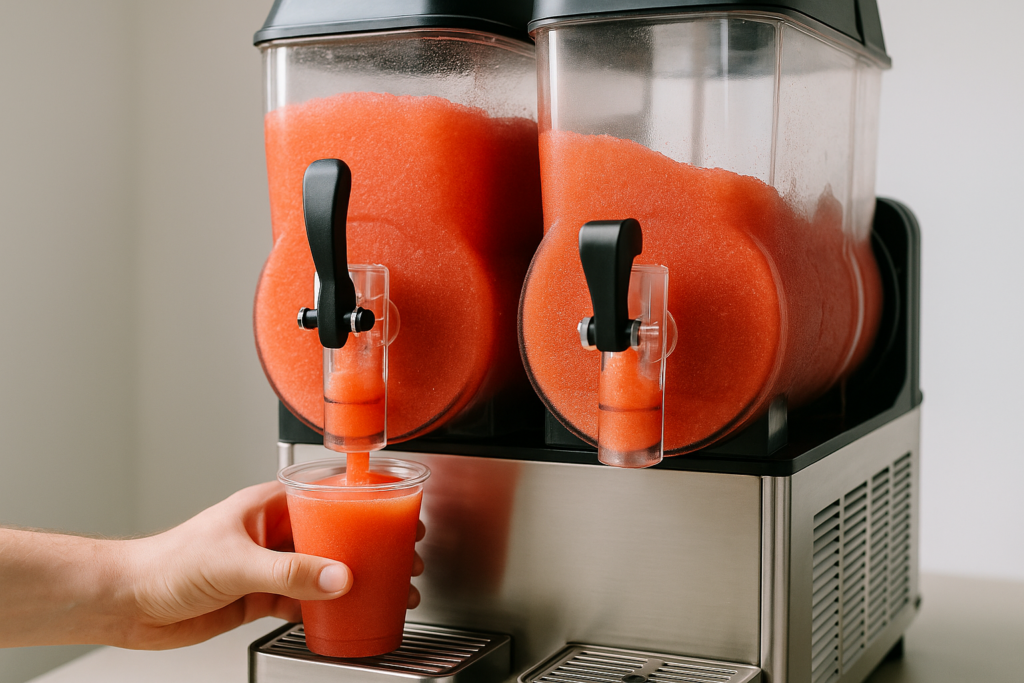
Slushies and frozen drinks are worse offenders than ice cream for a boring physical reason: liquid spreads. A spoonful of soft serve touches maybe a third of your palate, while a big pull through a straw coats the entire roof of your mouth at roughly 27 to 30 degrees Fahrenheit in under a second.
Countermeasures, Ranked by How Fast They Work
Not every fix is equal. Here is the honest ranking after an unreasonable amount of personal testing:
- Tongue to palate (fastest): relief in 5 to 15 seconds, works anywhere, costs nothing.
- Warm water swish: 10 to 20 seconds, slightly better if the pain is already at full volume, but you need a cup nearby.
- Warm hands on the face: 15 to 30 seconds. Helps the referred forehead ache more than the source.
- Cupped-hand breathing: 20 to 30 seconds. Good backup when your mouth is too numb to feel your tongue.
- Waiting it out: 30 to 60 seconds of standing in a parking lot squinting. Effective, undignified, avoidable.
Skip the internet suggestions involving cold water (it prolongs the constriction) or pressing your thumbs into your eye sockets (please do not).
How to Avoid Brain Freeze Without Sipping Like a Coward
Prevention beats treatment here, and it does not require drinking your slushy at a glacial pace. What matters is where the cold lands and how long it sits there. Change the geometry and you can drink at a normal speed.
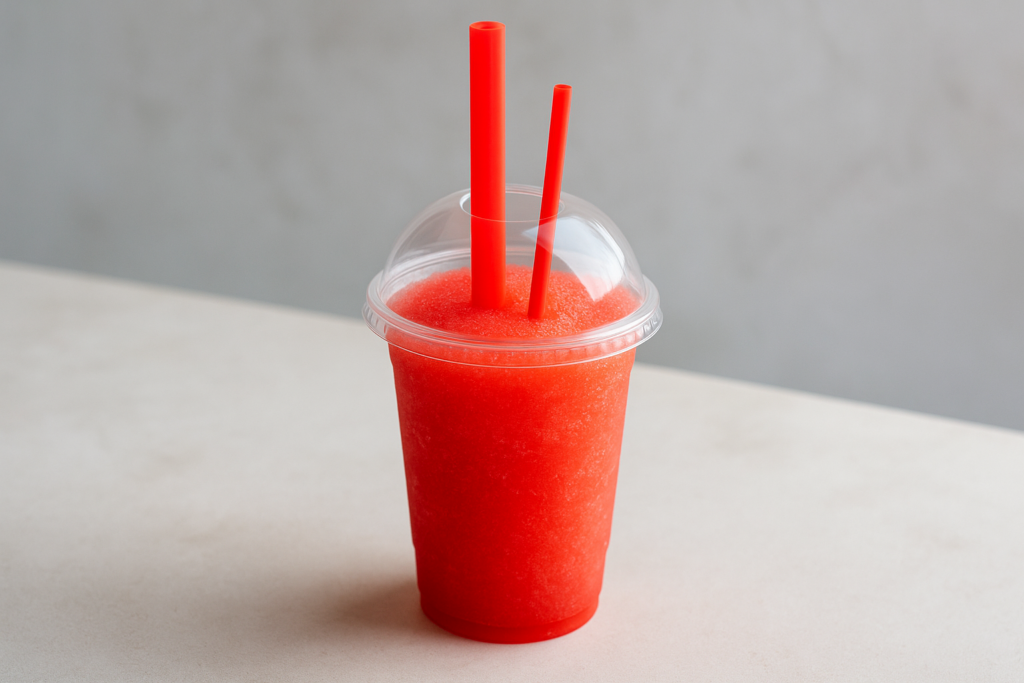
- Aim low. Point the straw toward the inside of your cheek or the floor of your mouth instead of straight up at your palate. This one change eliminates most freezes.
- Keep sips to two seconds. A short pull with a one-second pause lets your palate rewarm between hits.
- Swallow, do not hold. Parking a mouthful of ice on your palate while you talk is the single most common mistake.
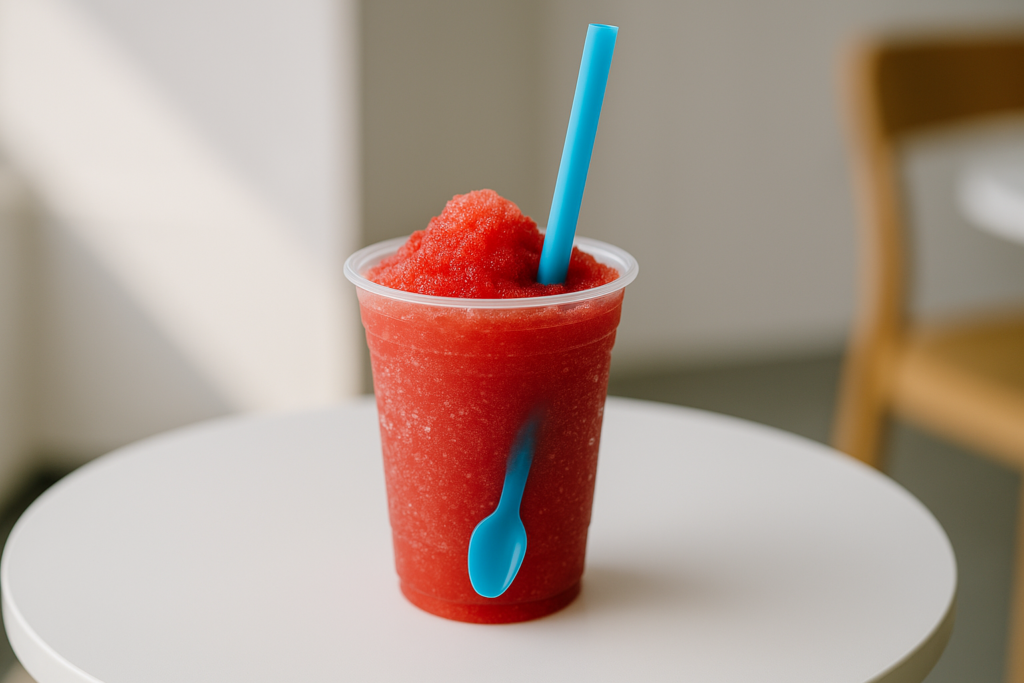
- Let it soften 60 to 90 seconds after pouring. A slightly slushier slush is a friendlier slush, and it is still cold.
- Breathe through your nose, since inhaling cold air across a chilled palate stacks the effect.
- Watch the texture. Over-frozen product is harsher on the mouth, which is part of why we obsess over how long a slushy takes to freeze properly.
If you make your own at home, consistency control is your best defense. A drink that pours in ribbons instead of shards spreads less aggressively across the palate, and our guide to making slushies at home covers how to hit that texture on purpose.
Is Brain Freeze Dangerous?
No. Cold-stimulus headache is considered benign, self-limiting and unrelated to any lasting damage, and there is no documented case of a brain freeze killing anyone or causing someone to pass out on its own. If you have ever felt lightheaded during one, the more likely culprits are standing up too fast, heat, dehydration or holding your breath through the pain.
The one meaningful pattern worth knowing: people who get migraines are noticeably more prone to these headaches, and the pain often feels sharper and lasts longer for them. Research summarized by groups like the American Migraine Foundation suggests the same trigeminal sensitivity that drives migraine makes cold triggers hit harder. That is worth mentioning to a doctor, not worth panicking about.
Brain Freeze Symptoms, and When It Is Something Else
A textbook brain freeze has a specific signature. It arrives 10 to 30 seconds after cold contact, sits in the forehead or temples, feels stabbing or squeezing, and disappears within a minute or two of rewarming.
What it should not do is linger. If you feel like you have a brain freeze without eating anything cold, or the headache outlasts five minutes, keeps returning, comes with nausea, vision changes, numbness, a stiff neck or slurred speech, that is a different conversation and worth a call to a clinician. Sudden severe headaches with no cold trigger are never something to read a blog post about and then ignore.
Chronic “brain freeze” in the mental sense (blanking, fog, losing your train of thought) is unrelated to cold headaches entirely, and usually traces back to sleep, stress or dehydration. We wrote something adjacent about the mental pause in why every great decision starts with a slushy, which is admittedly a more fun read than a symptom list.
Frequently Asked Questions
Are brain freezes harmful?
No, brain freezes are not harmful and cause no lasting damage, which is why they are classified as a benign primary headache. The pain is a nerve misreading a temperature change in your mouth, and it resolves on its own once the tissue rewarms. Repeated freezes do not injure your brain, your palate or your teeth.
Why do I get an instant brain freeze?
Instant or near-instant freezes usually mean the cold is hitting a wide area of your palate at once, typically from a straw aimed upward or a large first mouthful. Individual sensitivity plays a role too, since migraine sufferers and people with a more reactive trigeminal nerve often feel it within 5 to 10 seconds instead of 30. Redirecting the straw toward your cheek fixes it for most people.
Do brain freezes get worse with age?
For most people they get less frequent with age, not worse, and studies of cold-stimulus headache find the highest rates in children and teenagers. Adults may notice sharper individual episodes if they also develop migraines, but overall frequency tends to drop. Kids also tend to eat frozen treats faster, which does not help their odds.
How long does brain freeze usually last?
A typical brain freeze lasts 20 to 60 seconds, and the diagnostic criteria cap it at under five minutes. Actively warming the roof of your mouth with your tongue or warm water usually shortens it to roughly 10 to 20 seconds. Anything lasting longer than five minutes is probably not a cold-stimulus headache.
Ready to Test Your Technique?
Now that you can shut down a brain freeze in about 10 seconds, you may as well put the skill to use. Grab a cup or browse the Slushy Bros shop and drink at full speed, straw aimed low.