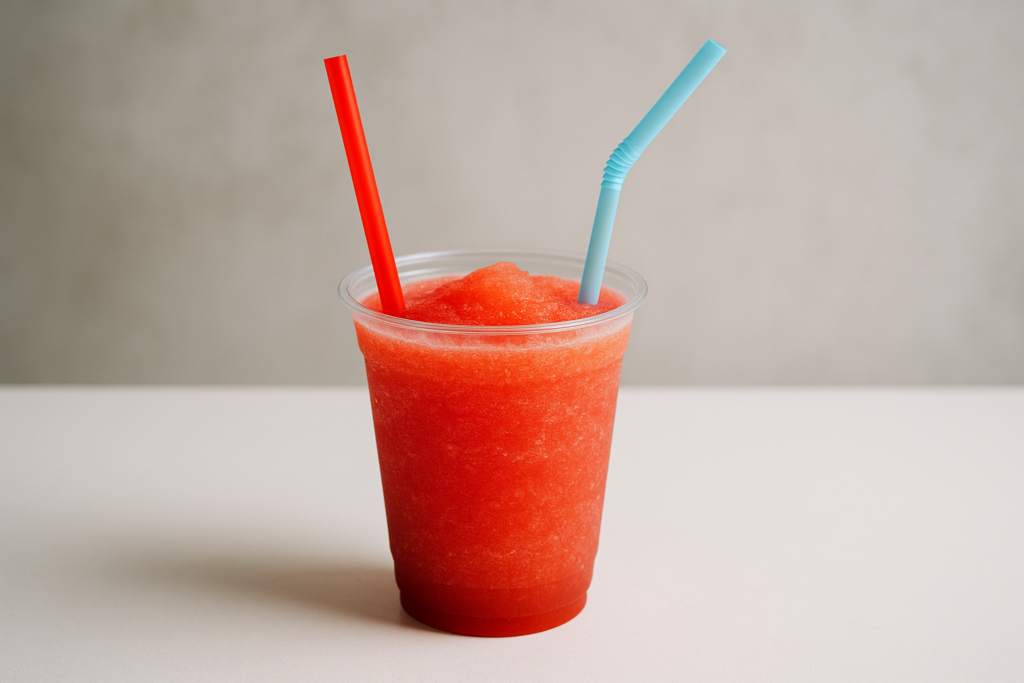
The best slushy flavor combinations are not random button-mashing at the machine, even though that is how most of us learned. A good mix follows a loose ratio: one dominant base, one accent that contrasts it, and something sour to keep the whole thing from tasting like liquid candy. Below are the combos worth trying, the ratios that make them work, and the handful of mixes that deserve to be quietly abandoned.
We have spent an unreasonable amount of time on this. Consider it research.
What Makes a Slushy Flavor Combination Actually Work
Most bad slush mixes fail for the same reason: two loud flavors fighting for the same job. Cherry and strawberry are both sweet red fruit notes, so blending them gets you a slightly confused cherry, not a new flavor. The mixes people remember follow three rough rules.
- Pick a dominant base (roughly 60 to 70 percent). One flavor should clearly lead. Blue raspberry, cherry, mango and coke syrups all carry a cup on their own.
- Add a contrasting accent (30 to 40 percent). Contrast means a different family: citrus against berry, cream against fruit, tropical against tart.
- Introduce acid. A splash of lime, lemonade or Sprite cuts the syrup and stops the last third of the cup from tasting cloying.
That third rule is the one almost nobody follows, and it is the difference between a combo you finish and one you abandon in a cupholder. If you are still sorting out the basics of frozen carbonated beverages versus regular ice slush, our breakdown of slushy vs Slurpee covers why the texture changes what flavors work.
The Elite Tier: Combinations Worth Ordering Twice
These are the mixes that hold up across machines, brands and gas stations. Ratios are approximate, because nobody is measuring at a self-serve station at 11pm.
- Blue raspberry + cherry (60/40). The default for a reason. The blue raspberry brings that sharp candy top note, cherry rounds out the finish, and the color lands somewhere between purple and a warning label.
- Cherry + limeade (70/30). Cherry limeade is the most reliable flavor combination in the frozen drink world. The lime acid does exactly what rule three asks for.
- Coconut + blue raspberry (50/50). Creamy tropical against candy-sour. This is the base of most “ocean” style drinks and it is genuinely great.
- Mango + strawberry (60/40). Softer and less aggressive than the candy flavors, closer to a smoothie. Good for people who claim they do not like slushies.
- Watermelon + lemonade (65/35). Tastes like a county fair. Best on days over 90 degrees, which is not a scientific claim but is true.
- Grape + blue raspberry (50/50). Aggressive, purple, unapologetic. Essentially a melted Jolly Rancher, which is either a selling point or a red flag depending on your age.
- Coke + cherry + vanilla (60/25/15). The frozen version of a fountain cherry vanilla coke. The carbonation keeps the texture lighter than fruit syrups do.
- Pineapple + lime (70/30). Underrated. Sharp, clean, and the only combo on this list that does not stain your tongue.
Sonic Slush Combinations That Earned the Hype
Sonic gets credit for turning slush mixing into a menu category rather than a secret. The best Sonic slush orders usually involve an add-in rather than just two syrups, and that is the part people skip.
- Ocean Water plus cherry. The coconut-Sprite base with cherry layered over it is the most requested variation on TikTok for good reason.
- Cherry limeade slush with real lime. Ask for extra lime. The fruit chunks change the texture and the acid balances the syrup.
- Blue raspberry slush with Nerds. Candy add-ins add crunch and a second wave of sour. They sink, so stir at the halfway point or the last four ounces become a gravel pit.
- Sour Patch Kids in a green apple or watermelon slush. The candy softens into chewy pieces around the two-minute mark.
- Powerade Mountain Berry Blast slush. Less sweet than the syrup flavors, which makes it the sleeper pick on a hot day.
The general Sonic rule: pick one syrup as the base and let the add-in be the second flavor. Two syrups plus candy is where a promising drink turns into brown mystery slush.
Slurpee Combos and the Layer Method
7-Eleven rotates its Slurpee flavors list constantly, so the specific options depend on your store and the month. What stays consistent is that Slurpee machines dispense from separate nozzles, which lets you layer instead of blend.
Layering means pouring in thirds and stopping between each one. You get distinct bands of flavor rather than a single blended taste, and the drink changes as you work down the cup. Blue raspberry on the bottom, cherry in the middle, cola on top is the classic three-layer build.
For a closer look at this topic, see our guide: How to Make a Slushy Without a Slushy Machine.
We cover this topic in more depth in 25 Weird Slushy Flavor Combos That Somehow Work.
Most locations also carry at least one sugar-free option, usually a light lemonade or berry variant running around 20 calories per 12 ounces compared to roughly 110 for the standard versions. Mixing sugar-free with full-sugar at a 50/50 ratio gets you a lighter drink that still tastes like something.
Worst Slushie Flavors and Combos to Skip
Some combinations are bad in an interesting way. These are just bad.
- Banana with any citrus. The acid turns the banana note flat and slightly medicinal.
- Root beer plus fruit syrup. Root beer’s vanilla and wintergreen notes do not share a cup with berry. Root beer works alone or with cream, full stop.
- Four or more flavors. Past three, everything converges on the same muddy brown-purple. There is no fourth flavor, only entropy.
- Bubblegum plus anything. Bubblegum is already a maximalist flavor. Adding to it is like adding a second bass player.
- Blue raspberry plus cola. Popular on dares, terrible in practice. The cola’s spice notes clash with the candy sweetness.
We ranked the individual flavors themselves in our elite-to-criminal flavor rankings, and yes, people had opinions.
Building These Combos at Home
Home slush is mostly a texture problem, not a flavor problem. Get the ratio right and any of the combinations above translate directly.
- Use 2 cups of ice to roughly 3/4 cup of liquid. Too much liquid gives you flavored water with regret in it.
- Keep some sugar in the mix. Sugar lowers the freezing point and keeps the crystals small. A fully sugar-free home slush tends to set into a solid block.
- Blend in short pulses, 10 to 15 seconds at a time. Continuous blending generates heat and melts what you just made.
- Freeze the cup for 10 minutes first. A cold cup buys you five or six extra minutes of proper slush texture.
- Layer by freezing in stages. Pour the first flavor, freeze 20 minutes, then add the next. Slower, but the bands hold.
If your homemade version keeps separating, the cup matters more than people expect. A double-wall insulated vessel like our cup holds slush texture noticeably longer than a thin plastic tumbler on a hot afternoon.
The Sugar and Brain Freeze Reality Check
A 20-ounce slush typically runs 60 to 80 grams of sugar, which sits well above the American Heart Association’s daily added sugar guidance of 25 grams for women and 36 for men. That is not a reason to skip it, just a reason to treat it as a treat rather than hydration.
Brain freeze usually peaks around 10 seconds in and clears within 30 to 60 seconds. Pressing your tongue flat against the roof of your mouth speeds up recovery by warming the palate. The bright colors, meanwhile, come from certified color additives that the FDA reviews and lists, which is worth knowing if you or your kids avoid specific dyes.
We talk about this kind of thing at length, sometimes productively, on the Slushy Bros podcast. There is also a strong argument that cold drinks and questionable food pairings are a legitimate lifestyle, which we made in full in our piece on unapologetic dining.
Frequently Asked Questions
What are the best slush flavor combinations?
Cherry with limeade, blue raspberry with cherry, and coconut with blue raspberry are the three most consistently good slush flavor combinations, all mixed at roughly a 60/40 or 50/50 ratio. Each pairs a dominant sweet base with a contrasting accent, which is what keeps the drink interesting past the first few sips.
What are the best flavors for a slushie?
Blue raspberry, cherry, coke, mango and watermelon are the five strongest standalone slushie flavors, meaning they hold up without a mixing partner. Blue raspberry and cherry also work as bases for nearly every combination, so if you are experimenting, start with one of those in the cup.
What is the most popular flavor of slushies?
Blue raspberry is the most popular slushy flavor in the United States, followed closely by cherry and cola. It has no real-world fruit equivalent, which is part of the appeal: the flavor exists almost entirely in frozen drinks, candy and syrup.
What are the best flavor combinations generally?
The reliable pattern is sweet plus sour, or fruit plus cream, at about a 2:1 ratio. Cherry and lime, coconut and berry, strawberry and lemon, and mango and chili all follow it, which is why cherry limeade shows up on nearly every frozen drink menu in the country.
Go Mix Something
Try two of these combinations this week and you will figure out fast which camp you are in: candy-sour or creamy-tropical. If you want the house standards we actually run by, they are all written down in the Slushy Bros house rules.