Somebody decided slush is a summer drink, and that somebody was wrong. The best slushy flavors for winter are the ones that lean into cold weather instead of apologizing for it: spiced apple, cherry cola, peppermint, cranberry, blue raspberry if you have no shame (we don’t). Here is what actually tastes good in January, what to mix, and how to keep the texture from turning into sad juice while you sit next to a radiator.
Winter Slush Is a Mindset, Not a Seasonal Error
The argument against drinking slush in winter is basically “you’ll be cold,” which ignores the fact that you are indoors with a blanket and a heating bill. Ice cream sells year round and nobody writes think pieces about it. Slush deserves the same respect.
There is also a practical case. Winter flavors skew warm and spiced, which contrasts nicely with a frozen texture, and the drier indoor air of a heated house actually makes a cold drink more welcome than people admit. That is the gap nobody covers: everyone posts summer slushie recipes in June and then abandons the category for five months.
The Best Slushy Flavors for Winter, Ranked by People Who Drink Slush in January
These are ranked by how well they hold up cold, how they pair with winter food, and whether they still taste like something after ten minutes of melting.
- Spiced apple cider. The runaway winner. Cinnamon and clove read as “warm” even when the drink is 28°F, which confuses your brain in a fun way.
- Cherry cola. Dark, a little bitter, weirdly sophisticated for something you drink through a straw. Frozen cola holds carbonation flavor better than most sodas.
- Cranberry lime. Tart enough to cut through heavy holiday food. This is the one to serve at a dinner where people are eating three kinds of potatoes.
- Peppermint white chocolate. Yes it is candy cane in a cup. December has a vibe and you should honor it.
- Blue raspberry. Not seasonal, not thematic, not defensible. Still top five. Blue raspberry is the flavor equivalent of a favorite hoodie.
- Orange cream. Creamsicle energy, but the citrus keeps it from feeling heavy. Great with a splash of vanilla syrup.
- Root beer float slush. Sarsaparilla and vanilla are already cold-weather flavors. Nobody talks about this and we find it suspicious.
- Gingerbread. Molasses plus ginger plus a little brown sugar. Harder to get right, best of the list when you do.
If you want to see how the mass market versions stack up before you commit to a full home project, we already did the legwork in our ranked breakdown of gas station slushies. Some of them are better than anything you’ll blend.
Winter Flavor Combinations That Sound Wrong and Taste Right
Mixing is where slush gets interesting, and winter gives you permission to be strange about it. A single flavor is fine. Two flavors is a personality.
- Cherry + cola: the safest experiment on this list and still one of the best.
- Blue raspberry + lemonade: cuts the candy sweetness by about a third and tastes more like fruit.
- Cranberry + orange: essentially a holiday table in liquid form.
- Apple + caramel: use a caramel syrup, not sauce, or it will sink to the bottom and sit there.
- Grape + green apple: tastes like a sour candy, which is the entire point.
- Coffee + vanilla: a frozen latte with better texture than most drive-through versions.
- Root beer + vanilla cream: the float, minus the melting scoop that ruins the last third.
We keep a longer running list of pairings in our guide to the best slushy flavor combinations, including several that should not work and somehow do.
The Kool-Aid Slushie Recipe Everyone Falls Back On
Every slushie recipe on the internet eventually arrives at Kool Aid, because it is cheap, it comes in roughly forty flavors, and the color payoff is absurd. A basic Kool Aid slushie takes about four minutes.
- 1 packet unsweetened Kool–Aid (any flavor, though cherry and blue raspberry freeze the cleanest)
- 1/2 cup granulated sugar, adjusted to taste
- 1 cup cold water
- 4 cups ice
Blend the liquid and sugar first until the sugar dissolves, then add ice and pulse in short bursts rather than running the blender continuously. Long blending generates friction heat and gives you a drink instead of slush. A Ninja or any high-torque blender will get there in 30 to 45 seconds of pulsing.
We cover this topic in more depth in The Weirdest Slushy Flavors Ever Made.
We cover this topic in more depth in How to Use Limited Drops to Build Demand.
Related reading: The Most Popular Slushy Flavors in America.
The sugar is not optional in the way people think. Sugar lowers the freezing point and keeps ice crystals small, which is why a zero-sugar mix tends to freeze into a solid brick. If you want to cut sweetness, cut it to about 1/3 cup rather than dropping it entirely, and expect a coarser texture.
Texture Is Harder in Winter (Here Is Why)
Here is the part the summer recipe posts skip. Winter houses run dry and warm, often 68 to 72°F with forced air blowing across whatever you set down, and that combination melts slush faster than a shaded porch in July. A slushy that would hold 25 minutes outside in May can go soupy in 12 next to a vent.
Three fixes that actually work:
- Pre-chill the cup. Five minutes in the freezer buys you several extra minutes of structure.
- Blend slightly thicker than you want it. It will loosen up within two or three minutes regardless.
- Do not park it near heat. Radiators, laptops, fireplaces and window sills with direct sun are all worse than they look.
We went deep on the physics of this in how long a slushy lasts before it melts, and on the recovery question in whether you can refreeze a melted slushy. Short version on the second one: you can, but the crystals come back bigger and grittier.
Machine, Blender or Freezer Bag
You do not need a slush machine, but the differences are real. A countertop Kool-Aid slushie machine churns continuously and keeps crystals fine, which is why a convenience store product feels smoother than anything you make at home. Expect $80 to $250 for a home unit, and expect it to take up counter space you will resent by March.
- Slush machine: best texture, slowest setup (most need 45 to 90 minutes to bring a batch down to temperature), best for parties.
- Blender: fastest, good enough, slightly coarser. A slushie recipe for a machine usually needs more liquid than a blender version.
- Freezer bag method: zero equipment, flavored liquid in a sealed bag, squished every 30 minutes for about 2 hours. Weirdly satisfying.
If you are going the no-equipment route, our walkthrough on making slush without a machine covers timing for each method.
Adult Versions, Briefly
Winter is peak season for the grown-up stuff. Frozen old fashioned, wine slush, spiked cider slush and bourbon peach are the four that show up most often in alcoholic slush recipes, and they all follow one rule: alcohol lowers the freezing point, so keep it under roughly 10 percent of total volume or your batch will never firm up. Freeze the base first, add the liquor at the end, blend for five seconds.
Non-alcoholic slush drink recipes hold better anyway, which is a genuine argument for the mocktail version. Sparkling cider with cranberry is the one we make most, and nobody has complained yet.
Frequently Asked Questions
What is the most popular slushy flavor?
Blue raspberry is consistently the top seller in the United States, accounting for a large share of frozen carbonated beverage sales at convenience chains. Cherry usually lands second, with cola and grape trading third. Blue raspberry’s dominance is partly flavor and heavily color, since the dye reads as “slushy” to most people before they taste anything.
What are the best slush flavor combinations?
The three that work most reliably are cherry with cola, blue raspberry with lemonade, and cranberry with orange. Each pairs a sweet base with something tart or bitter, which keeps the drink from flattening out as it melts. Aim for roughly a 60/40 split rather than an even mix.
What are the best slush flavors?
For winter specifically, spiced apple cider, cherry cola, cranberry lime and peppermint top most lists in 2026, with blue raspberry holding on through sheer popularity. Warm-spiced flavors pair better with cold weather food than tropical ones do, though nobody will stop you from ordering mango in February.
What is in a slushy that kids shouldn’t have?
Glycerol, the ingredient that keeps commercial slush from freezing solid, has prompted health advisories for young children. The UK’s Food Standards Agency advises against slush ice drinks for children under four and recommends no more than one per day for ages four to ten. Added sugar is the other concern, since a 16 oz slushy can carry 40 to 60 grams, and the FDA sets the daily value for added sugars at 50 grams.
Come Drink Slush With Us in the Cold
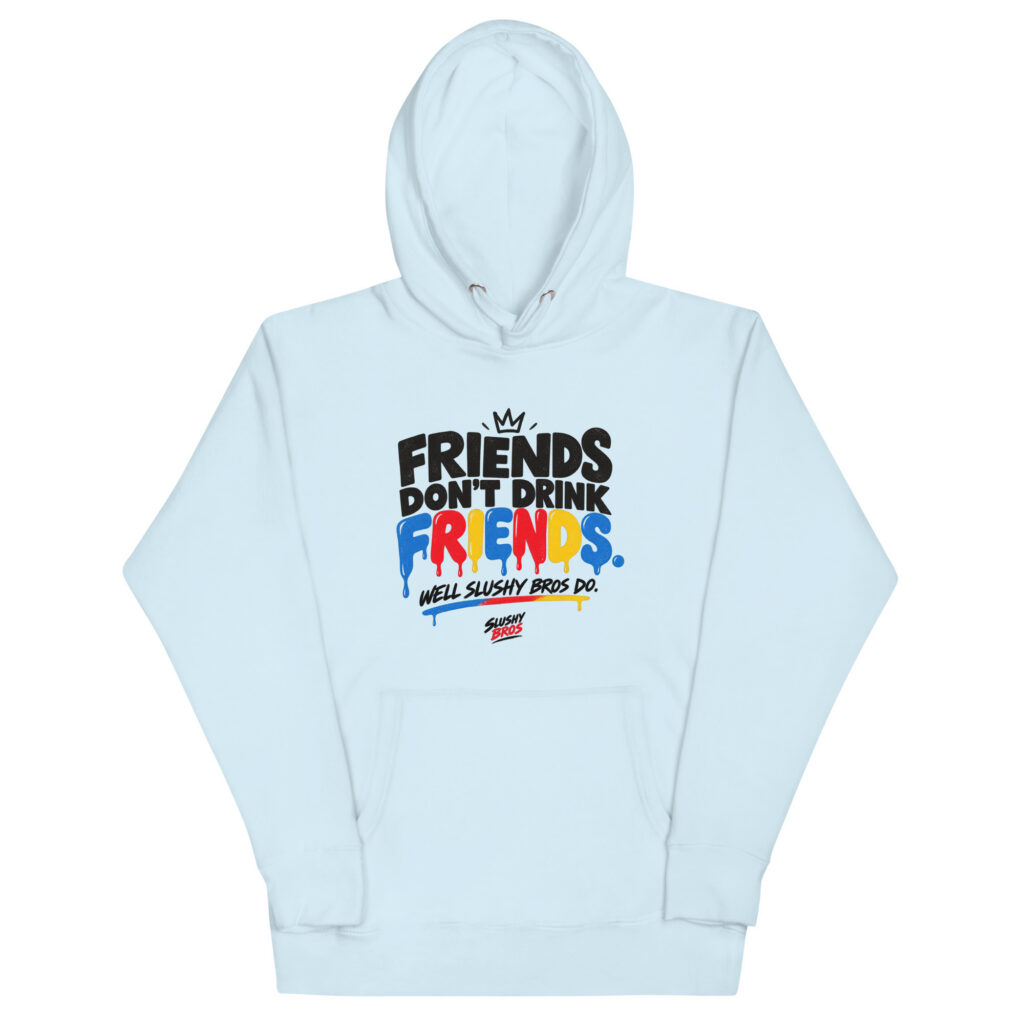
We drink these year round and document most of it, badly, on the Slushy Bros podcast and in our ongoing argument that friends don’t drink friends, but Slushy Bros do. If you want the cup, the straw and the merch to go with your winter habit, the shop is open.