Ask a hundred Americans to name their favorite frozen drink and you will hear the same handful of answers, which is why the most popular slushy flavors in America have barely changed since the 1970s. Blue raspberry sits at the top, cherry refuses to die, and every regional chain has one weird house flavor that locals defend like family. Below is the honest ranking, plus the chain-by-chain breakdown nobody bothers to write.
We drink a disgusting amount of frozen sugar for research purposes, so consider this field-tested rather than scraped off a corporate press release.
The Short Answer: Blue Raspberry Wins
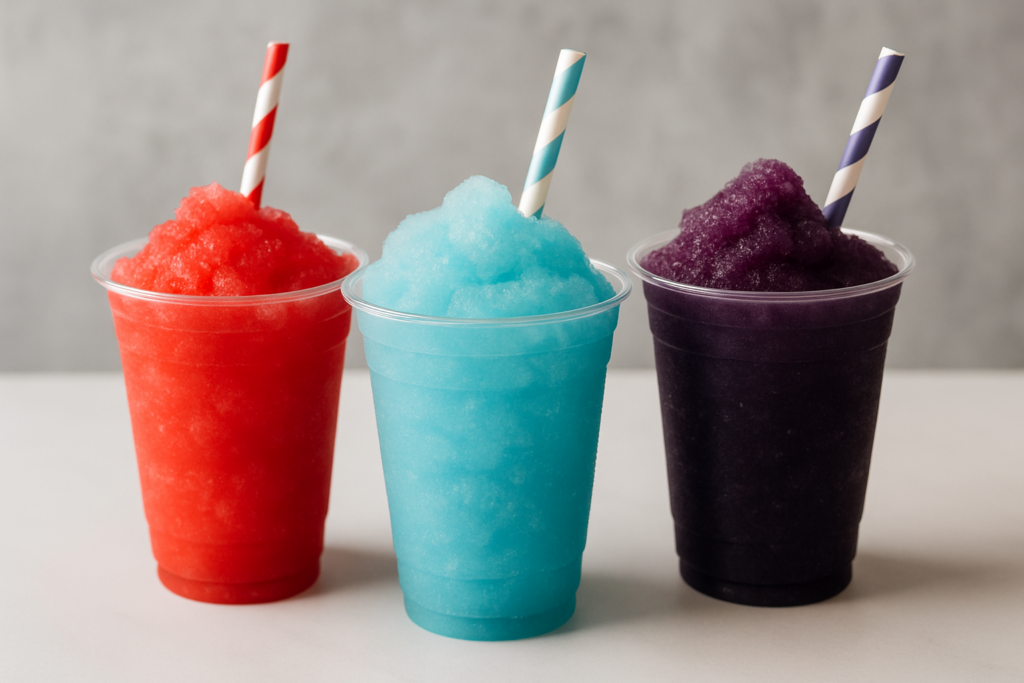
Blue raspberry is the single most popular slush flavor in the country, and it is not particularly close. It shows up as the default blue option at 7-Eleven, Sonic, Circle K, movie theaters, county fairs and roughly every hand-crank machine in a bowling alley. Cherry is the runner-up and the sentimental favorite, especially with anyone who grew up before 1995.
The interesting part is not the winner. It is how quickly the list splinters once you leave the top two, because slushy preference is shaped by which chain happened to be near your middle school.
The Top 10 Most Popular Slushy Flavors in America
- Blue raspberry. Tastes like nothing in nature and everything like being nine years old. Sweet, faintly tart, stains your tongue for about 40 minutes.
- Cherry. The original. Wild cherry leans candy-sweet, while black cherry versions run deeper and slightly medicinal in a way people either love or refuse.
- Coca-Cola. Frozen Coke is the adult pick, and McDonald’s kept it on menus for decades because the carbonated bite survives freezing better than most syrups.
- Strawberry. The most food-like of the bunch. Checkers built a cult following on its strawberry piña colada blend, and Burger King’s Frozen Fanta Strawberry moves serious volume in summer.
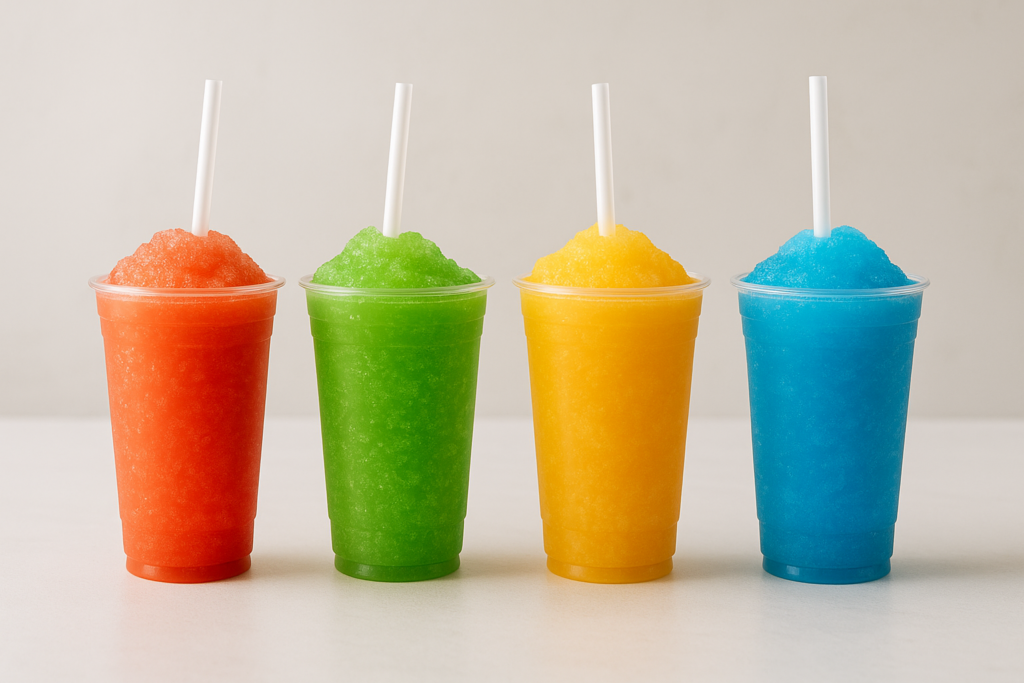
- Watermelon. Peaks hard between May and August. Good watermelon slush has a green-rind tartness on the back end instead of pure candy sugar.
- Blue coconut. Sonic’s signature, and the flavor most likely to convert a skeptic. Creamy, tropical, weirdly sophisticated for something that color.
- Lemonade and limeade. The sleeper category. Sonic’s limeade slush and its Lemonberry version outsell plenty of the brighter options because they cut through heat instead of coating your mouth.
- Grape. Polarizing. Purple slush has a devoted base and a loud opposition, mostly because cheap grape syrup tips into cough-drop territory fast.
- Mango and tropical blends. The fastest-growing group on convenience store menus, helped along by mango-heavy drinks everywhere else. Jollibee’s Coconut Dream and Strawberry Bliss freezes fall here too.
- Sour or green apple. The candy-inspired lane, usually paired with a sour dust rim at self-serve stations. Bigger with teenagers than any other age group by a wide margin.
Why Blue Raspberry Became the Default
Blue raspberry exists because of a color problem, not a fruit problem. Red raspberry, cherry and strawberry all competed for the same red dye slot, so manufacturers pushed raspberry into blue territory using Brilliant Blue FCF, known on labels as FD&C Blue No. 1. The flavor itself is a loose approximation of the whitebark raspberry, which almost nobody has eaten.
That accident turned into the most recognizable frozen drink flavor in America. Kids picked blue because it looked different from every other red thing on the counter, and three generations later it is still the first button people press.
The Regional Split Most Rankings Ignore
National lists pretend the country agrees. It does not, and the geography is pretty consistent once you start paying attention at the counter.
We cover this topic in more depth in The Weirdest Slushy Flavors Ever Made.
For a closer look at this topic, see our guide: The Official Slushy Bros Flavor Tier List.
- The South and Southwest: Sonic territory, so blue coconut, limeade and cherry with add-ins dominate. Ordering a slush with Nerds or chunks of real fruit is normal here and confuses everyone else.
- The Northeast: Slurpee country, heavier on cola, blue raspberry and whatever seasonal flavor 7-Eleven is testing that month.
- The Midwest: Gas station chains rule, and cherry holds a bigger share than it does anywhere else. Blue raspberry still wins, just by a narrower margin.
- Texas specifically: Pickle, mango with chamoy and tamarind-leaning flavors have real shelf space, not novelty status.
- The Pacific Northwest: Tart and fruit-forward options (lemon, raspberry, marionberry when anyone bothers) outperform candy flavors.
If you travel and you want the best read on a region, look at which nozzle has the most drip buildup. That is the flavor the locals actually drink, and it beats any menu board.
Chain by Chain: Where the Popular Flavors Live
Flavor loyalty is really chain loyalty. Here is who owns what:
- Sonic: The deepest slush lineup in the country, with blue coconut, cherry, grape, limeade, Lemonberry and a rotating seasonal slot. Add-ins are the whole point.
- 7-Eleven: Slurpee flavors skew toward cola, blue raspberry and licensed tie-ins. Store-level lineups vary more than people expect, so the Slurpee list at one location rarely matches the next town over.
- Burger King: Frozen Fanta in strawberry and blue raspberry, sweet and unapologetic about it.
- McDonald’s: Frozen Coke and frozen Fanta blue raspberry, available regionally and seasonally.
- Checkers and Rally’s: Strawberry piña colada is the standout, and it drinks closer to a smoothie than a slush.
- Circle K and regional gas stations: Self-serve, cheap, inconsistent freeze quality. We ranked the best gas station slushies if you want the full teardown.
Flavors That Sound Better Than They Taste
Every popularity list needs a bottom shelf. These are the ones that consistently get abandoned half-finished:
- Bubblegum. Fine for four sips, then it tastes like chewing a candle.
- Banana. Artificial banana and ice crystals are a bad pairing, full stop.
- Cotton candy. Pure sugar with no acid to balance it, which makes the last third punishing.
- Root beer slush. Loses its sharpness when frozen and goes flat-tasting almost immediately.
- Anything labeled “blue” with no second word. Nobody, including the staff, knows what that is.
How to Pick a Flavor Like You Know What You Are Doing
There is a method to this, and it takes about ten seconds at the machine:
- Check the freeze. If the product looks wet and glassy in the barrel, pick a tart flavor, since sugar-heavy syrups turn syrupy when the machine runs warm.
- Match the weather. Above 90 degrees, go citrus or watermelon. Below 60, cherry and cola hold up better. We make the case for drinking frozen drinks in January in our take on the best slushy flavors for winter.
- Layer, do not blend. Two flavors poured in halves stay distinct. Mixed together they usually turn brown and taste like neither.
- Mind the sugar load. A large frozen drink can carry 60 to 100 grams of added sugar, and Harvard’s Nutrition Source puts sugary drinks near the top of the American added-sugar problem. A small is a reasonable compromise.
- Respect the technique. Flavor choice matters less than delivery, which is why we wrote an entire piece on the proper way to drink a slushy.
Making the Popular Flavors at Home
Slush syrup is easy to buy now. Restaurant supply sites, big-box warehouse clubs and most online grocers sell half-gallon jugs of blue raspberry, cherry and strawberry concentrate for roughly $15 to $30, which works out to dozens of drinks. Cheaper still: freeze any soda or juice in a shallow pan and scrape it every 30 minutes for about two hours.
The flavors that translate best at home are the tart ones, because homemade ice crystals are coarser and sweetness reads stronger when it is cold and chunky. Cut your syrup ratio by about 20 percent compared to the label and taste before you commit.
Frequently Asked Questions
What are the top 10 slushy flavors?
The top 10 are blue raspberry, cherry, Coca-Cola, strawberry, watermelon, blue coconut, lemonade or limeade, grape, mango or tropical blends, and sour green apple. That order holds across convenience stores, drive-thrus and self-serve machines nationally, though individual chains shuffle the middle depending on what their regional suppliers stock.
What is the most popular flavor of slushies?
Blue raspberry is the most popular slushy flavor in America, appearing on an estimated 9 out of 10 frozen drink menus. It became the default in the 1970s when raspberry got assigned a blue dye to avoid competing with cherry and strawberry reds, and the association stuck permanently.
What are some popular flavors of slush?
Beyond the big two, the most commonly stocked slush flavors are cola, strawberry, watermelon, grape, limeade, blue coconut and sour apple. Seasonal rotations add another layer, with peach and mango in summer and cranberry or candy-cane flavors appearing between November and January.
What are the best slush flavors?
The best slush flavors are the ones with acid to balance the sugar, which means limeade, watermelon and black cherry outperform bubblegum or cotton candy over a full 32-ounce cup. Blue coconut is the best pick for anyone who wants something creamier without losing the frozen texture.
Come Argue About the Ranking With Us
We are wrong about at least two of these according to our comment section, and we would rather hear it from you than a focus group. Bring your hot take to the Slushy Bros sports lineup, watch us nail a shot on the first try, and grab something from the free merch drop we do every 10K subs while it lasts.