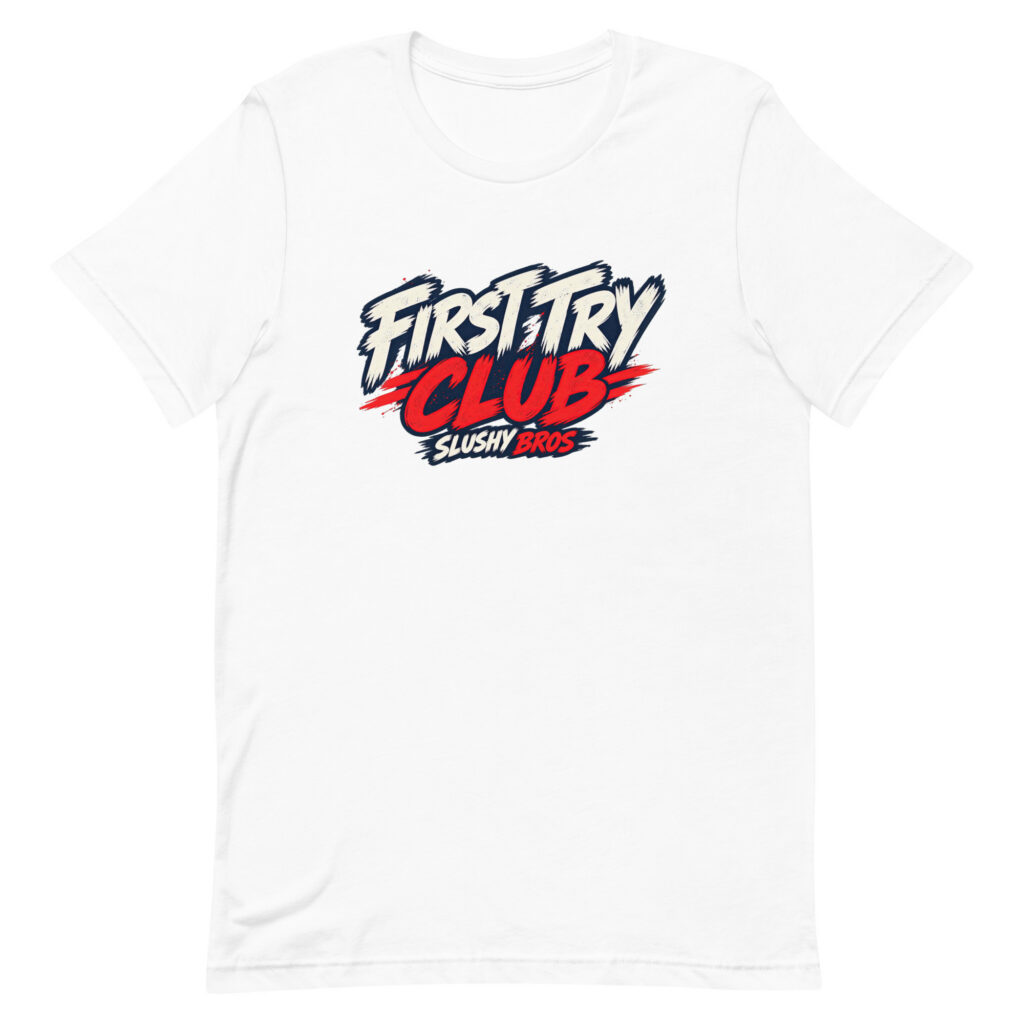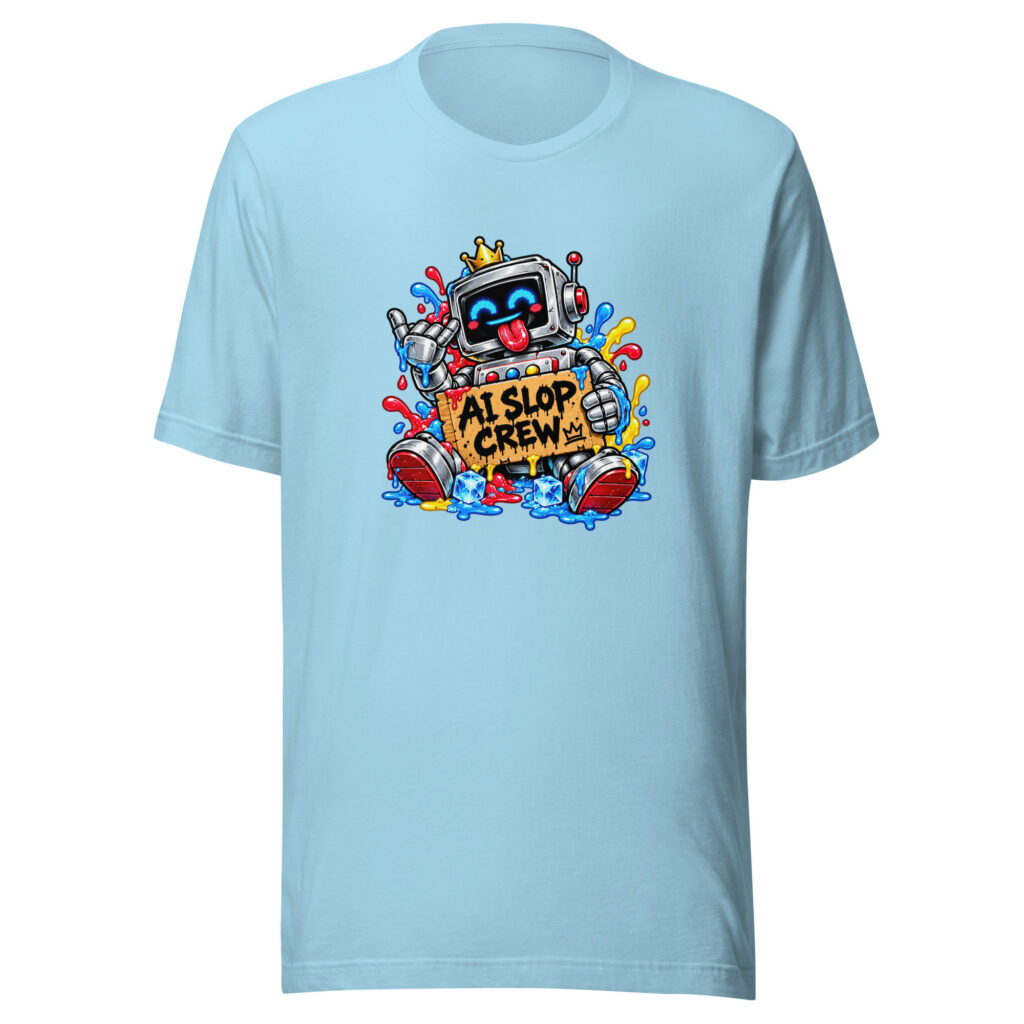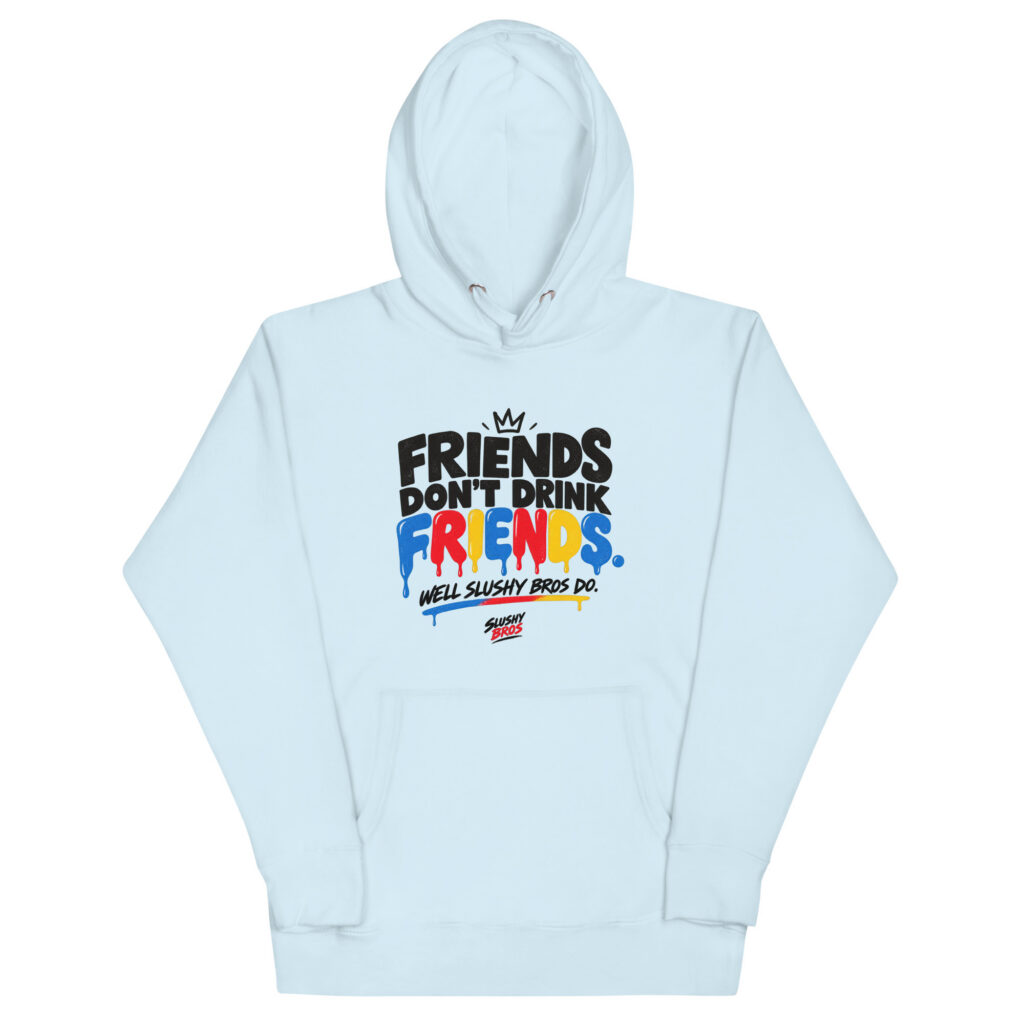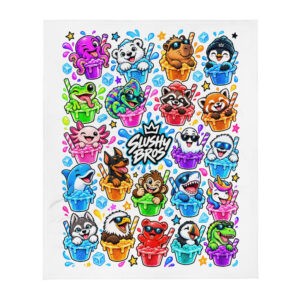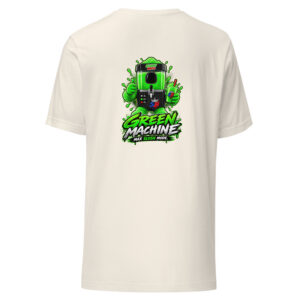
Almost every Slushy Bros shirt started as a line somebody shouted in a backyard with a cup on their head, and roughly nine out of ten of those lines never make it onto cotton. The path from a video joke to a T-shirt sounds glamorous and is mostly spreadsheets, sample boxes and arguing about font size. Here is how a throwaway bit actually becomes something you can wear to the grocery store.
The Joke Has to Work With the Sound Off
A joke in a short is carried by timing, music, a costume and whatever face Purple is making. A shirt has none of that. It gets about one second of attention across a parking lot, so the line has to land cold, without context, on a stranger.
We test this by writing the phrase in plain text on a white background and sending it to the group chat with no explanation. If somebody replies with a laugh instead of “what is this,” it survives round one. Lines that need a setup get cut, no matter how well the video performed.
That filter is the same one we use on scripts, which we broke down in our post on turning inside jokes into Slushy Bros videos. A bit that only works because you were there is a great memory and a terrible product.
The Three-Comment Rule
We do not print anything until the audience asks for it at least three separate times, unprompted, across different platforms. One comment is a fluke. Three means the line detached from the video and started living on its own.
The clearest signal is people quoting the line back at us under a completely unrelated upload. When a kid named Martin leaves “put this on a shirt” under a video that has nothing to do with the joke, that is the audience doing our market research for free.
- Repeat quoting: the same phrase appears in comments on three or more posts
- Cross-platform spread: it shows up on TikTok, YouTube Shorts and Instagram, not just one feed
- Stitch and duet use: other people rebuild the bit with their own friends
- Direct requests: actual “where do I buy this” messages, which are rarer than you would think
We keep a running note of candidate lines with the date and the comment count. Most sit there for months. A few get loud enough in two weeks that we skip ahead.
From Screenshot to Mockup
Once a line clears the comment rule, the design work starts, and it is faster than the decision-making that came before it. Our rough sequence looks like this.
- Pull the frame. We grab the exact moment from the video so the shirt and the clip share a visual reference point.
- Write three type treatments. One plain, one chaotic, one that leans on the character colors. Plain wins more often than we expect.
- Check the name. Before anything gets printed we run a quick search on the USPTO trademark database to make sure the phrase is not somebody else’s property.
- Mock it on a body. Flat mockups lie. We put the art on a photo of an actual person before approving placement and size.
- Order one sample. One shirt, one color, printed by the shop we plan to use for the run.
The sample stage kills more designs than any other step. Ink that looked crisp on a screen can come back chalky, and a 12-inch print that felt bold in the mockup can look like a billboard in person.
Blanks, Ink and the Shrink Problem
The blank matters more than the art. A funny line on a scratchy 4.3-ounce shirt gets worn twice and then lives in a drawer forever, which does nothing for us or for you.
We stick to midweight cotton in the 5.3 to 6.1 ounce range, ring-spun where the budget allows, with a preference for pre-shrunk or garment-dyed blanks. Shrinkage on untreated cotton can run 5 to 8 percent after a hot wash, which is how a medium quietly becomes a crop top. Certifications like OEKO-TEX STANDARD 100 give us a baseline on what is actually in the dye.
We cover this topic in more depth in Why We Don’t Want Slushy Bros Clothing to Feel Like YouTuber Merch.
Related reading: How to Style a Slushy Bros Graphic Tee Without Looking Like You’re Wearing Merch.
For printing, screen printing wins on runs over about 50 pieces because the per-unit cost drops hard and the hand feel is better. Direct-to-garment makes sense for test drops and multi-color art in small quantities. Embroidery gets reserved for logo-only pieces, since nobody wants a stitched paragraph on their chest.
What a Run Costs and How Long It Takes
Numbers vary by shop and region, but the ranges have been fairly consistent for us. A one-color screen print on a decent blank usually lands somewhere between $7 and $12 per unit at 50 to 100 pieces, before shipping. Add a second color or a back print and expect another $1.50 to $3 per shirt.
Timing is the part people underestimate. From approved artwork to boxes on the floor, a typical run takes 10 to 18 business days, and that assumes no reprints. Add the sample round and the comment-watching period before it, and a joke from a video in March can easily become a shirt in June.
It is the same pattern we hit with video production, where a 20-second clip eats an entire day. Short output, long runway.
Why Most Jokes Never Get Printed
Plenty of our best-performing clips will never be merch, and that is on purpose. A joke can be funny and still make a terrible shirt.
- It needs the visual. If the humor lives in the costume or the edit, text alone does nothing.
- It ages in weeks. Trend-dependent lines are stale before the boxes arrive.
- It is unwearable in public. Some bits are hilarious and would get you a conversation with a school principal.
- It belongs to someone else. Sounds, references and catchphrases we borrowed are not ours to sell.
We also pass on anything that only makes sense to people who have watched everything. A shirt should work for the person who saw one clip and for the person who can read the whole backstory on our video archive.
Drops, Giveaways and the 10K Rule
Not every shirt is for sale. Some of the first pieces from any new design go straight into our free merch giveaway every 10K subs, partly because it is fun and partly because it is the cheapest honest focus group in existence.
When somebody wins a shirt and posts a photo in it, we learn three things at once: whether the fit works, whether the print survives a wash, and whether the joke still reads on a real human body. Those photos tell us more than any analytics dashboard. Watching how people share them also shows which line is actually the keeper.
Growth and merch are linked more tightly than they look. We wrote about that feedback loop in what we learned from our first million views, and the short version is that audience size changes which jokes are safe to print.
What Other Creators Can Take From This
If you are building a channel and thinking about merch, the biggest mistake is printing your logo. A logo shirt asks a stranger to advertise for a brand they have no relationship with. A joke shirt gives them something to say.
Start with one design, order 24 to 50 units, and track how many sell in the first 14 days. If you move fewer than half, the problem is usually the line, not the marketing. We keep notes on this kind of thing on our creators page for people doing the same thing from a different backyard.
Frequently Asked Questions
How Did Slushy Noobz Get Popular?
Slushy Noobz grew mainly through short-form video, with clips circulating under tags like #slushynoobz and #slushynoobzclips on TikTok and YouTube Shorts. It is a separate channel from Slushy Bros, and people mix the two up constantly because of the name. The growth pattern is familiar: repeatable characters, short runtimes and a format viewers can recognize in under two seconds.
Does Slushy Noobz Have Merch?
Searches for Slushy Noobz merch are common, but availability changes often, so the only reliable source is that channel’s own linked store. Fan-made listings on third-party marketplaces are usually unofficial. For anything Slushy Bros related, our own shop and giveaway pages are the only official places our shirts come from.
What Was the First Slushy Noobz Video?
There is no verified public record of the first Slushy Noobz upload, since early TikTok video archives are frequently deleted or set to private by creators. Most channels in this space quietly remove their first 20 or 30 posts once a style settles. If you want the earliest confirmed clips, scroll to the bottom of the channel’s profile rather than trusting reupload accounts.
How Long Does It Take to Turn a Joke Into a Shirt?
Our average is about 8 to 12 weeks from the original clip to shirts in hand. Roughly half of that is the waiting period where we watch comments to confirm the joke has legs, and the rest is sampling, artwork and a 10 to 18 day print run.
How Do You Decide Which Joke Becomes Merch?
A line needs at least three unprompted requests across different platforms before we even mock it up. After that it has to pass the plain-text test, stay funny without the video, and not depend on a trend that will be dead in a month. TikTok’s own tagline is “Make Your Day,” and a shirt has to do that job for a full day, not nine seconds.
Check the Current Drop
New designs show up when a joke earns it, and the first ones usually go out free through the subscriber giveaway. Have a line from a clip you want printed, leave it in the comments and we will add it to the list.