The short answer: a slushy machine needs a full clean and sanitize at least every 24 hours of use, a deeper teardown clean once a week, and a gasket-and-seal inspection monthly. That 24-hour number is not something vendors invented to sell cleaning kits, it comes straight out of food safety code for frozen dessert equipment. If you only run your machine on weekends, the clock changes, and that is where most people get confused.
We have wrecked enough augers and tasted enough funky third-day margarita mix to have opinions here. Below is the schedule we actually follow, broken down by how you use the machine rather than one generic checklist.
Where the 24-Hour Rule Comes From
Frozen beverage dispensers sit in an awkward category: they hold sugary liquid at temperatures around 25 to 28 degrees Fahrenheit, which slows bacteria without stopping it. The FDA Food Code requires frozen dessert and beverage dispensing equipment to be disassembled, cleaned and sanitized at the frequency the manufacturer specifies, and when no frequency is given, at least every 24 hours.
Home machines are not inspected by a health department, but the biology is identical. Sugar plus moisture plus a warm-ish sealed chamber grows yeast and mold quickly once the compressor stops running.
So the practical rule most people can live with: if there is product in the barrel and the machine is running, you are on a 24-hour cycle. If the machine is empty, dry and open, you are on a use-based cycle instead.
Cleaning Frequency by How You Actually Use It
A bar pushing 200 slushies a night and a household making one pitcher on Saturday do not need the same routine. Here is how the frequency shakes out in practice:
- Commercial bowl or barrel machines running daily: full disassembly, wash and sanitize every 24 hours, or every 72 hours only if the manufacturer explicitly allows it and your local health code agrees.
- Home countertop units (Ninja SLUSHi and similar): empty and clean after each batch, or at minimum once the mix has been in there about 12 hours.
- Rental or party machines: clean immediately at the end of the event, before the mix sets into the auger threads and turns to glue.
- Machines in storage: a full clean before storing, and another quick clean and sanitize right before the first batch, since dust and gasket residue collect during downtime.
- Dairy, cream liqueur or real juice mixes: treat these as strict 24-hour products with no exceptions, regardless of machine type.
If you are shopping for a unit and cleaning time matters to you, it is worth comparing teardown designs first. Some of the models in our roundup of the best slushy machines for parties come apart in four pieces, and others need a tool and a prayer.
The Daily Routine That Takes 15 Minutes
Daily care is less about scrubbing and more about not letting sugar cement itself to moving parts. Most machines take 10 to 20 minutes for a proper daily clean once you have the sequence memorized.
- Drain the leftover product into a container. Chilled slush mix can usually be refrigerated and reused within a day or two, but dairy-based mixes should be discarded.
- Rinse the barrel with cool water and run the auger briefly so the water reaches the evaporator wall and the spiral threads.
- Remove the drip tray, spigot and front panel and wash them in warm water with a mild, unscented detergent.
- Sanitize with a food-safe sanitizer at the label dilution, then let parts air dry rather than towel drying with a cloth that may shed lint or bacteria.
- Wipe the exterior and the lid seal, which is where syrup drips collect and get sticky enough to attract fruit flies overnight.
Anything with sugar in it will caramelize if it dries on the spigot valve, and that is the part people skip most often. A soft bottle brush handles it in about 30 seconds.
The Weekly Deep Clean
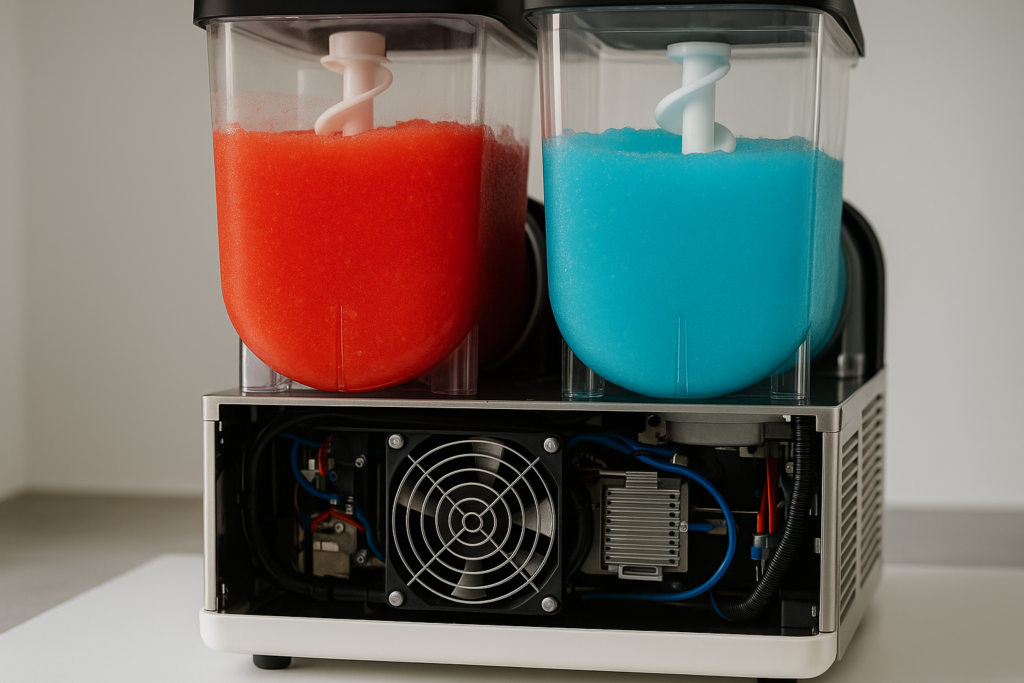
Once a week, take the machine apart further than you would daily. That means pulling the auger, removing the front gasket and the spigot assembly completely, and cleaning the inside of the barrel by hand instead of relying on a water rinse cycle.
We cover this topic in more depth in How Much Does a Slushy Machine Cost?.
For a closer look at this topic, see our guide: What’s Inside a Commercial Slushy Machine?.
The parts that hide residue are the auger shaft seal, the O-ring behind the faucet, and the small groove where the front panel meets the barrel. Soak them in warm soapy water for 5 to 10 minutes, brush them, rinse, then sanitize. Knowing what the auger and evaporator are doing in there makes this less intimidating, and we broke that down in our explainer on how slushy machines work.
Do not put barrels or augers in a dishwasher unless the manual specifically says they are dishwasher safe, since heat warps polycarbonate and cracked barrels leak. Skip bleach on aluminum evaporator cylinders too, because chlorine pits the metal and pitted metal holds bacteria.
Monthly and Quarterly Maintenance Most People Forget
Cleaning keeps the drink safe, and maintenance keeps the machine alive. Every month, inspect the gaskets and seals for cracking, flat spots or discoloration, and replace anything that no longer springs back when you press it. Worn seals are the number one cause of leaks and of augers grinding themselves down.
Every one to three months, vacuum or brush the condenser fins and clean the air filter if your unit has one. A dust-blocked condenser makes the compressor work harder, stretches freeze times and shortens the machine’s life by years.
Lubricate the auger shaft with food-grade lubricant only, following the manual, since petroleum grease contaminates product and degrades rubber seals. A dedicated slush machine cleaning kit usually bundles brushes, a gasket pick and food-safe lube for around $20 to $45.
Signs You Waited Too Long
Machines tell on you before the drink does. Watch for these:
- A sour, yeasty or fermented smell when you lift the lid, which usually means sugar has been feeding yeast for a couple of days.
- Pink, black or gray film around the spigot, lid seal or barrel edge. That is biofilm, and rinsing alone will not remove it.
- Squealing or groaning from the auger, a sign that dried sugar or a dry seal is creating friction.
- Slush that never firms up even after 60 to 90 minutes, which often points to a dirty condenser rather than a bad mix.
- Cloudy product with sediment at the bottom of the cup.
If you hit any of those, strip the machine completely, sanitize every removable part and throw out the batch. It is not worth the story.
How Long You Can Leave a Machine Running
Commercial slush machines are built to run continuously and most have a night or sleep mode that holds product just above freezing until morning, so they can stay powered for days between cleans. Home units are different. Manufacturer guidance for countertop models, including the Ninja SLUSHi, generally caps holding time at around 12 hours before you should empty and clean the vessel.
Leaving a home machine on overnight will not usually hurt the motor, but the mix quality drops and the 24-hour clock still applies. If you want slush ready for a morning shoot or an early tailgate, it is better to prep the mix cold in the fridge and start the freeze cycle 30 to 60 minutes ahead. We do this constantly for filming, and it is one of the small production habits we talk about on our creators page.
Frequently Asked Questions
How long do slushy machines last?
Home countertop slushie machines typically last 2 to 5 years, while commercial units cleaned on schedule commonly run 7 to 12 years. The difference is almost entirely maintenance: condenser cleaning, gasket replacement and not letting sugar dry inside the barrel. Compressors rarely fail first, seals and augers do.
How long can I leave a slushie machine running?
Commercial machines can run continuously, often for several days, as long as product is held in a night or standby mode. Home models should be emptied and cleaned within about 12 hours of holding a batch, and any mix in the barrel resets the 24-hour cleaning requirement.
How do I clean my slushie machine?
Drain the product, rinse the barrel with cool water, then remove the auger, gasket, spigot and drip tray and wash them in warm soapy water before sanitizing and air drying. Avoid abrasive pads, bleach on aluminum surfaces, and the dishwasher unless the manual approves it. A weekly clean with full disassembly takes most people 25 to 40 minutes.
How much does it cost to have an ice machine cleaned?
Professional cleaning for a commercial ice or slush machine typically runs $150 to $400 per unit, depending on size, location and how bad the buildup is. Most service companies recommend two visits a year for ice machines, with operators handling routine cleans in between. Doing it yourself costs closer to $30 in supplies plus your time.
Do different mixes change how often I need to clean?
Yes. Dairy, cream liqueurs and fresh juice require a strict 24-hour clean, while shelf-stable syrup concentrates give you a bit more margin. Alcohol slows microbial growth slightly but does not replace sanitizing, and it still leaves sugar residue in the seals. If you are gifting a machine to someone, the gifting page has our picks worth pairing with a cleaning kit.