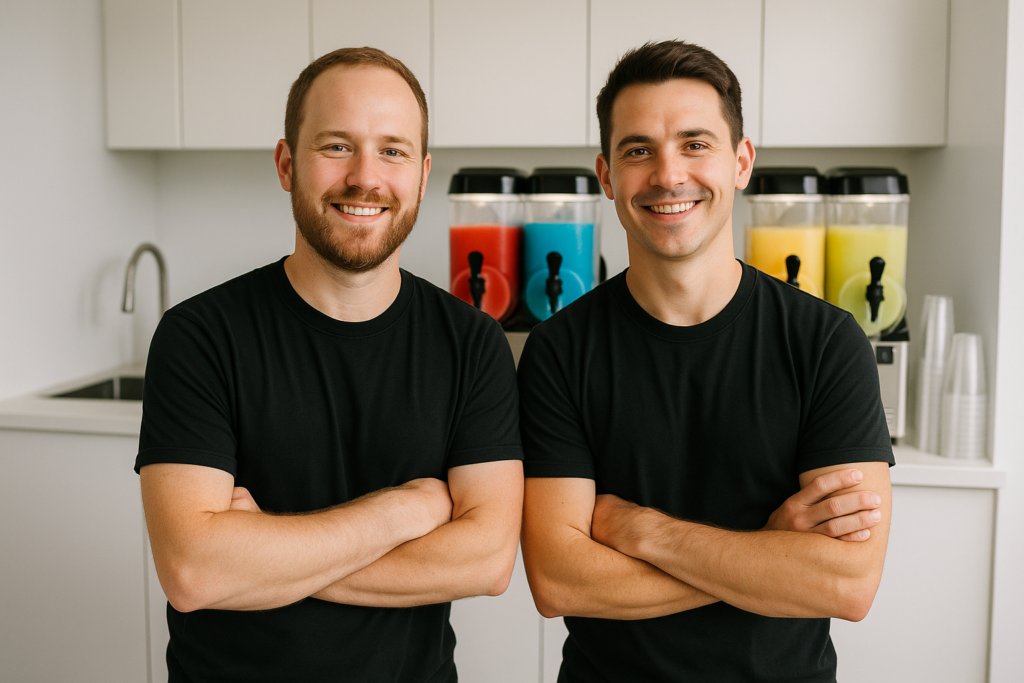
Figuring out how to get your first 1,000 YouTube subscribers is less about hacks and more about repeating one thing well until strangers decide you are worth a click. Most channels that cross 1,000 subscribers do it with somewhere between 30 and 100 uploads, not one lucky video. Here is the process we actually used, plus the parts nobody puts in the thumbnail.
We run a channel about slushies and hot dogs, so trust us when we say the topic matters less than the format. If a couple of guys can build an audience on frozen sugar water, your niche is fine.
The Honest Math Behind 1,000 Subscribers
Subscribers are a lagging indicator. People subscribe after they watch, so your real job is minutes watched, and the subs follow a few days later like a receipt.
A rough conversion benchmark: 0.5% to 2% of viewers subscribe on a decent long-form video, and closer to 0.1% to 0.5% on Shorts. Run the numbers and the picture gets clear fast:
- Long-form at 1% conversion: you need roughly 100,000 total views to reach 1,000 subscribers.
- Shorts at 0.3% conversion: you need something like 300,000 views, which sounds worse but is often easier to get.
- Mixed approach: Shorts bring the traffic, long-form converts it, and most small channels get there in 4 to 12 months.
That threshold is not arbitrary. YouTube’s Partner Program requirements sit at 1,000 subscribers plus 4,000 valid public watch hours (or 10 million Shorts views) in the past 12 months, which is why everyone treats 1k like a finish line when it is really a starting gun.
Step 1: Pick a Format, Not Just a Topic
A topic is “slushies.” A format is “we rank gas station slushies out of ten and argue about it.” The second one tells a viewer exactly what they get every single time, and repeatable formats are what turn a viewer into a subscriber.
Before you film anything else, write your format as one sentence a 12 year old could repeat. If you cannot, your audience cannot either, and they will not come back for episode two.
- Test 3 formats over your first 10 to 15 uploads instead of 15 unrelated one-offs.
- Keep the one with the best average view duration, not the one you personally liked making.
- Number your episodes so the series feels like a series, which nudges binge behavior.
We wrote a whole breakdown of how we come up with video ideas if you want to see how messy the process really is behind the scenes.
Step 2: Package the Video Before You Shoot It
Title and thumbnail decide whether anyone ever sees your editing. Write the title first, sketch the thumbnail second, then film to deliver on that promise, because reverse-engineering packaging after the fact almost always produces something vague.
Good small-channel packaging usually follows a few rules:
- 3 to 6 words on the thumbnail, maximum. Anything longer disappears on a phone screen.
- One clear subject, one clear stake. A face, an object, a reaction. Not a collage.
- Curiosity with a payoff, not clickbait. If the title asks a question, answer it within the first 30 seconds or people leave.
- Test alternates. Swapping a thumbnail on an underperforming video after 48 hours is free and occasionally doubles the click-through rate.
Our most-watched clips are usually the simplest ideas executed cleanly. Case in point: he got it in on the first try, which is about 20 seconds long and needed exactly zero explanation.
We cover this topic in more depth in What Happens After a YouTube Short Goes Viral?.
Related reading: How to Get More Returning Viewers on YouTube.
For a closer look at this topic, see our guide: How Often Should You Post YouTube Shorts?.
Step 3: Use Shorts as the Front Door
Shorts are the fastest free distribution on the platform right now, and for a brand new channel they are the difference between 40 views and 40,000. The catch is that Shorts viewers subscribe at a much lower rate, so you have to give them a reason to stick around.
The pattern that works: post 3 to 5 Shorts a week that are self-contained clips or teasers, then pin a comment or use an end card pointing to the full video. Think of Shorts as the sample cup and long-form as the large.
- Hook in the first 1 to 2 seconds. No intros, no logo, no “hey guys.”
- Loop the ending back into the opening frame so the replay count climbs.
- Keep the same face, set and voice across Shorts so people recognize you the fourth time you show up on their feed.
Step 4: Actually Ask, But Earn It First
The ask works, and small channels leave it on the table constantly. The trick is placement: asking at the 15 second mark converts poorly because nobody has decided they like you yet.
Ask after your best moment instead, around 50% to 70% through the video, in one sentence, with a reason attached. “Subscribe if you want to see us try the mustard one” outperforms “don’t forget to like and subscribe” by a wide margin because it names a future payoff.
Incentives help too, as long as they are real. Ours is straightforward: free merch every 10K subs, which gives the audience a shared milestone to push toward rather than a favor they are doing for us.
Step 5: Publish on a Cadence You Can Survive
Consistency beats volume, and burnout is the number one reason channels die at 300 subscribers. Pick a schedule you can hold for 6 months while employed, tired and occasionally sick.
- 1 long-form per week plus 3 Shorts is the realistic sweet spot for a solo creator.
- 2 long-form per week accelerates learning, but only if quality holds.
- Batch film 3 or 4 videos in one session so a bad week does not break the streak.
YouTube reaches a massive share of the population, with roughly 83% of U.S. adults using it according to Pew Research Center, so the audience for almost any format exists. Your constraint is output and iteration, not demand.
The Gap Nobody Talks About: Build Rituals, Not Just Videos
Every guide covers thumbnails and SEO. Almost none cover the thing that made our first 1,000 subscribers stick, which is having inside jokes, running bits and rules that belong to the audience.
A ritual is anything a returning viewer can participate in. Rating every flavor on the same 1 to 10 scale. A catchphrase people type in the comments before you say it. A recurring segment at minute 3 of every episode.
- Reply to every comment for your first 200 videos. Yes, all of them. It costs 20 minutes and builds your first 100 regulars.
- Name your audience something. It sounds corny and it works.
- Put the audience in the content by using their suggestions, their flavor picks, their dares.
- Have a point of view. Ours is basically cold drinks, hot wieners, zero regrets, and that stance does more recruiting than any keyword ever did.
Rituals are why 200 loyal subscribers will out-perform 2,000 passive ones in the algorithm. Returning viewers drive session time, and session time drives the recommendations that get you the next thousand.
What to Skip Entirely
Sub4sub schemes, bought subscribers and “1,000 subscribers in 5 minutes” promises all poison the same well: they create an audience that never watches. YouTube shows your next video to people who behave like your current viewers, so fake subs teach the system to find more people who ignore you.
Also skip obsessing over tags, uploading 20 minute videos with nothing in them, and rebranding the channel every three weeks. None of that moves the number.
Frequently Asked Questions
How can I get my first 1,000 YouTube subscribers?
Publish 30 to 100 videos in one repeatable format, package each with a clear title and thumbnail, and use Shorts to feed viewers into long-form content. Most channels convert 0.5% to 2% of long-form viewers into subscribers, so roughly 100,000 cumulative views gets you to 1,000 subscribers.
How can I get 1,000 YouTube subscribers for free?
Every method that actually works is free: consistent uploads, better packaging, Shorts distribution, community replies and collaborations with channels your size. Paid promotion rarely helps a new channel because ad traffic converts to subscribers at a much lower rate than organic recommendations.
How long does it take to get your first 1,000 subscribers on YouTube?
Most consistent creators reach 1,000 subscribers in 6 to 12 months posting once or twice a week, though Shorts-heavy channels sometimes do it in 4 to 8 weeks. Channels that upload sporadically often take 2 years or never get there, since momentum matters more than total video count.
Do 1,000 subscribers get paid?
Yes, once you also hit 4,000 valid public watch hours in 12 months (or 10 million Shorts views) and get accepted into the YouTube Partner Program. Realistic early earnings land around $2 to $10 per 1,000 long-form views depending on niche and audience country, which for most new channels means $50 to a few hundred dollars a month.
Want to See the Format in Action?
We are building Slushy Bros using exactly what is described above, one flavor and one bad decision at a time. Watch the newest episodes and see what we are doing next on the creators page, then go make your first ten videos.