About eight out of every ten Slushy Bros videos started as something only four people thought was funny. The process of turning inside jokes into Slushy Bros videos is less about writing and more about translation: taking a bit that works because of shared history and rebuilding it so a stranger gets it in under three seconds. Some jokes survive that rebuild, most don’t, and we’ve gotten decent at telling the difference early.
Here’s the actual pipeline, from a line someone says in the backyard to a clip that goes up on a Tuesday night.
Every Joke Starts in the Group Chat, Not the Script
We don’t have a writers room. We have a group chat that fills up with voice memos, blurry photos and screenshots, and roughly 60% of it is one of us quoting something another one of us said badly three weeks ago.
The jokes that stick are the ones that keep coming back without anyone trying. If a bit gets referenced a fourth or fifth time on its own, that’s our first real signal it has legs. Jokes that need someone to re-explain them are already dead; they just don’t know it yet.
We keep a running note with maybe 40 of these at any time. Most sit there for months. A handful get pulled out the day before a shoot because somebody suddenly figures out the visual.
The Stranger Test: Would This Land Without Us Explaining It?
This is the filter that kills the most ideas, and it’s brutally simple. We describe the joke out loud to someone who wasn’t there when it happened, usually a sibling, a roommate or whoever’s standing in the kitchen.
If we have to say “okay so you have to understand, there was this one time at a hockey game,” the joke fails. Context is the enemy of a 20-second video. The feeling underneath the joke can survive, but the backstory has to go.
What usually remains is a recognizable situation plus a specific reaction. The hockey game detail disappears. The guy who takes the game way too seriously stays, because everyone knows that guy.
- Keep: the character dynamic, the escalation, the physical bit
- Cut: names, dates, places, anything requiring setup
- Replace: niche references with a visual anyone can read instantly
Finding the Universal Version Underneath
Almost every inside joke is a specific version of something general. Our job is to find the general thing and then make it specific again in a way that includes the audience instead of locking them out.
One of our longest-running bits came from one of us absolutely refusing to admit he’d lost a bet in a parking lot. The video version has nothing to do with parking lots or bets. It’s just a guy who will not accept an obvious outcome, which is a thing people have watched happen in their own friend groups a hundred times.
That translation step is also what separates a funny idea from one that travels, something we broke down in more detail in our post on the difference between a funny idea and a viral video idea. Funny in the backyard and funny on a phone screen at 11pm are two different skills.
Casting the Joke to the Right Color
Once a joke survives the stranger test, we figure out which Slushy Bro it belongs to. This sounds like a bit, but it’s genuinely the fastest way we make editing decisions later.
Red escalates, Yellow tries to stop it, Blue makes it weirder, Purple exists in his own timeline. If a joke doesn’t fit any of them cleanly, it usually means the joke isn’t about a person, it’s about a situation, and those tend to land softer. You can read the full breakdown in the official character guide if you want the long version.
Casting also solves the hook problem. Viewers who already know the characters understand the setup from the costume alone, which buys us roughly two extra seconds before anyone decides to scroll.
Trimming It to Around 18 Seconds
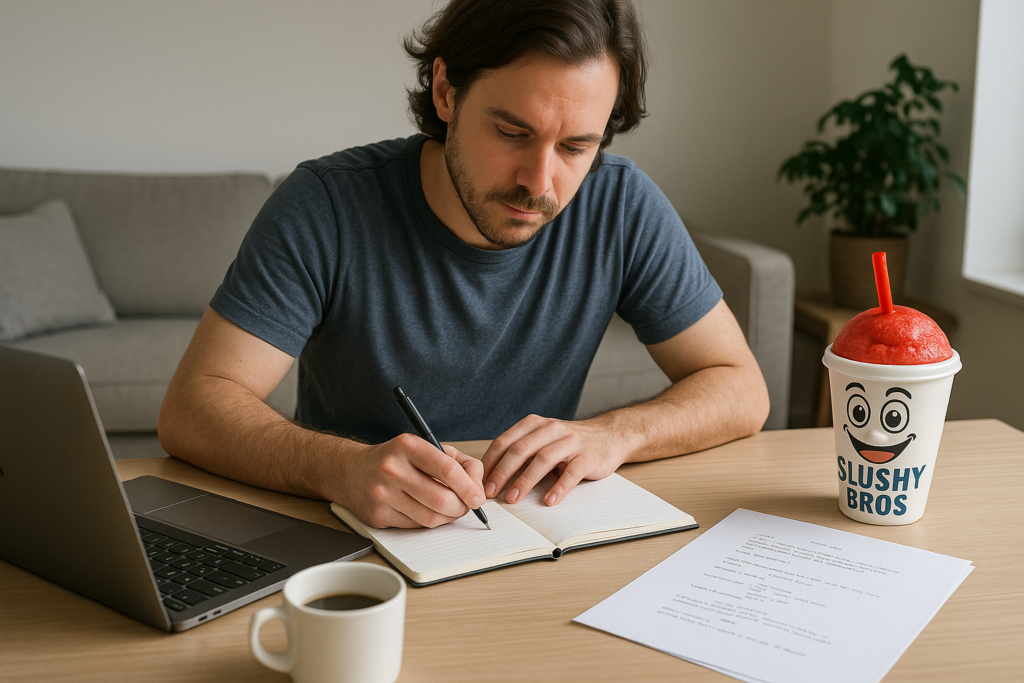
We write these things on a phone, usually in three or four lines. There’s no formal script, but there is a structure we keep coming back to:
- Second 0 to 2: the visual that tells you what’s happening without dialogue
- Second 2 to 8: the normal version of the situation
- Second 8 to 15: the turn, where one of us breaks the pattern
- Second 15 to 20: the reaction shot, which is usually the actual punchline
Short-form audiences decide fast. Pew Research has YouTube sitting at the top of American platform use, which means our clips are competing against a basically infinite feed of other people’s best 20 seconds. That pressure is good for comedy. It cuts the filler.
The reaction shot being the punchline took us about a year to figure out. We used to end on the line. Now we end on someone’s face, and retention on the last three seconds went up noticeably.
Shooting Before the Joke Goes Stale
Inside jokes have a shelf life. If we sit on one for six weeks, we stop finding it funny, and that shows up on camera as a flat read nobody can fix in the edit.
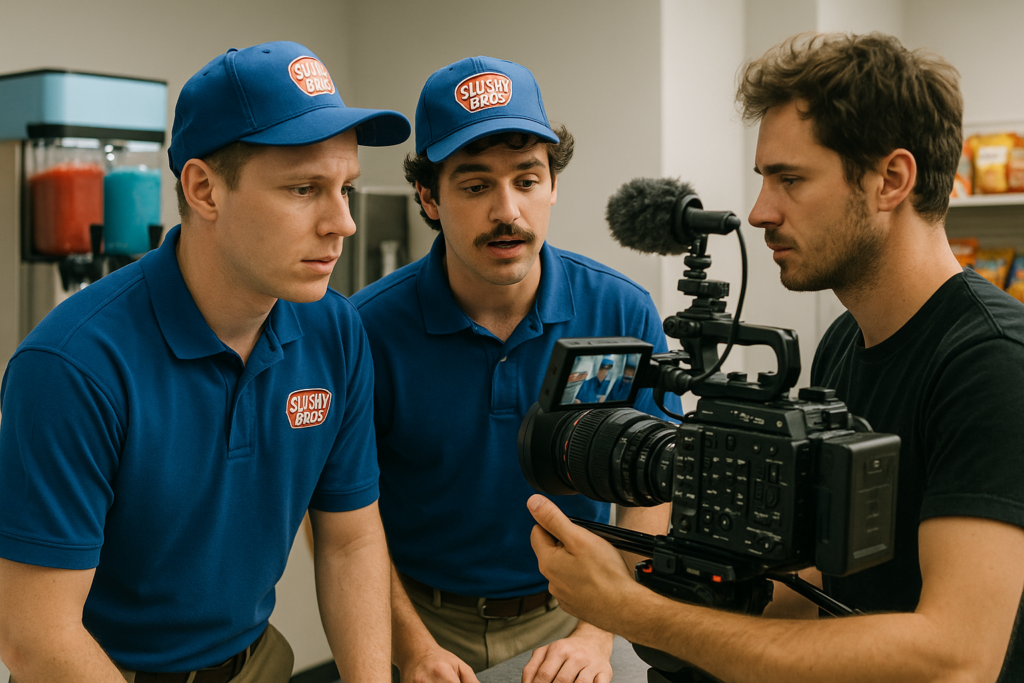
So we batch. A shoot day in the backyard runs four to six hours and we come out with anywhere from five to twelve usable clips, which is roughly a 40% hit rate on what we attempt. The ones that work almost always came from a joke we’d been quoting that same week.
We also leave the camera running between takes. A real percentage of our most viewed videos are accidents captured while someone was supposed to be resetting a prop.
The Jokes We Killed and What They Had in Common
We’ve shot plenty of bits that never went up. Looking back at the graveyard, the failures cluster into a few recognizable types:
- Reference-dependent jokes: funny only if you’d seen the same video we had that month
- Timing jokes: ones that needed a four-second pause we couldn’t afford
- Mean jokes: stuff that read as fun between friends and as cruel to anyone outside the group
- Explanation jokes: anything where the setup was longer than the payoff
That third category is the one we’re strictest about, and it’s basically written into our house rules. The costumes let us be ridiculous without anybody becoming the target, and we’d rather lose a joke than lose that.
Letting the Audience Finish the Joke
The strange part of all this is that once a private joke goes public, it stops being ours. Comments turn a one-off line into a recurring bit, and people start quoting a video back at us before we’ve even planned a sequel.
That’s happened often enough that we now treat the comment section as a writers room we didn’t hire. We’ve built entire follow-ups off a single reply that reframed what the original clip was about. The Frozen series grew exactly that way, from a throwaway gag into something people now ask about by name.
Our Instagram tends to get the rougher, faster versions first, so if you want to see jokes at the half-baked stage before they get a proper shoot, that’s where they live.
Frequently Asked Questions
How Many Inside Jokes Actually Become Videos?
Roughly 1 in 8 jokes from our running notes list ever gets filmed, and about half of those get posted. The drop-off happens at the stranger test, where most bits turn out to need too much backstory to work in 20 seconds.
How Long Does It Take to Make One Slushy Bros Short?
A single finished clip takes between 90 minutes and four hours of combined shooting and editing, even though the result is under 25 seconds. Costume setup, resets and the 10 to 20 takes we burn on a physical bit account for most of that time.
Do You Write Scripts for the Videos?
We write three to five lines of structure, not full dialogue. Exact wording changes on every take, and the version that makes the final cut is usually something nobody planned, which is why we keep recording between takes.
Where Did the Slushy Bros Characters Come From?
All four colors came out of one backyard afternoon with three costumes and no plan, which we wrote about in how a backyard joke turned into Slushy Bros. The personalities weren’t designed, they just hardened over the first 50 or so videos until each color meant something specific.
Can I Send You an Inside Joke From My Own Friend Group?
Yes, and people do it weekly, mostly through Instagram DMs. We can’t use most of them for the same reason we cut our own, but a handful have survived the translation and made it to film.
What Happens if Merch Doesn’t Fit?
Standard sizing exchanges are handled through our refund and returns policy, usually within a couple of weeks of delivery. Check the size chart on the product page first, since a few of our older drops ran small through the shoulders.
Watch the Next Joke Make It Out of the Group Chat
New clips go up on YouTube and Instagram every week, and the half-finished ones show up first in stories. Follow along at Slushy Bros and tell us in the comments which bit deserves a sequel.